
How to Prevent Chargebacks as a Merchant?

garry
March 24, 2026
1
minutes
.webp)

At FirmEU, one of the most common issues we see merchants struggling with is chargebacks — not because they don’t understand payments, but because they underestimate how quickly chargebacks can damage their entire payment setup.
A chargeback happens when a customer bypasses you and raises a dispute directly with their bank. Instead of requesting a refund, they ask the issuing bank to reverse the transaction. From that moment, the control shifts away from you and into the hands of the bank and payment provider.
Now here’s where most merchants get it wrong — they treat chargebacks as isolated refund cases.
In reality, payment providers don’t see it that way.
They see patterns.
- A rising dispute ratio signals operational or fraud risk
- Frequent disputes indicate poor transaction control
- Sudden spikes raise compliance and monitoring concerns
In most cases we handle, once a merchant crosses even 1% chargeback ratio, the situation escalates quickly — higher fees, rolling reserves, or in some cases, complete account shutdown.
This is exactly why chargebacks are not just a customer issue — they are a payment infrastructure risk.
This is also why having a clear chargeback prevention approach matters from day one, rather than reacting after disputes start piling up. Knowing how to prevent chargeback risk before it escalates is what separates stable merchants from those constantly fire fighting disputes.
Because preventing chargebacks is not only about customer support or refunds — it's about having the right processing setup, the right partner, and the right transaction flow from the beginning. In other words, a true chargeback prevention solution starts with your payment infrastructure, not just your customer service team.
Worried about rising chargebacks affecting your business?
With the right payment setup and preventive strategies, you can reduce disputes, protect your revenue, and keep your transactions stable from day one.

The Real Cost of Chargebacks for Businesses (Beyond Refunds)
At FirmEU, we often see merchants focusing only on the refunded amount when a chargeback happens. But in reality, the actual cost is much higher — and in some cases, it directly impacts the survival of the business.
A single chargeback is not just a lost sale. It creates a chain reaction across your payment operations.
What a Chargeback Actually Costs You
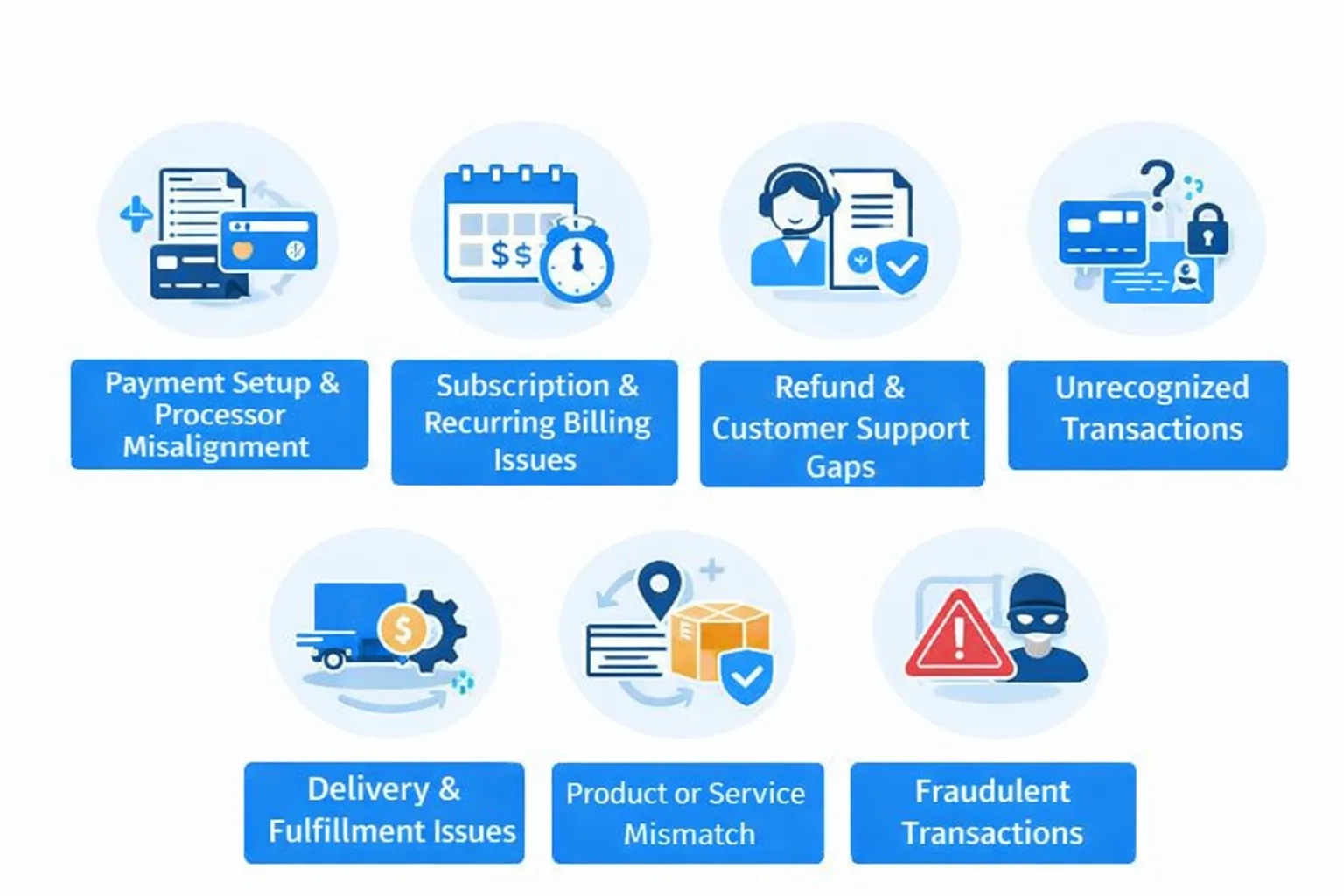
Common Reasons Why Chargebacks Happen
When we review a merchant’s payment activity, we rarely see chargebacks happening randomly. In most cases, there is a clear pattern behind them — and once you understand these patterns, preventing disputes becomes much more manageable.
Let's take a few of the most common reasons found across various business settings.
Fraudulent Transactions (Unauthorized Payments)
One of the most straightforward yet damaging reasons behind chargebacks is unauthorized transactions. When stolen card details are used, the cardholder will almost always raise a dispute.
In many cases, this happens because:
- Fraud filters are too weak or not properly configured
- No strong authentication layer, like 3D Secure, is implemented
- High-risk transactions are not monitored in real time
From a payment provider’s perspective, this signals a lack of fraud control. And once this pattern builds up, your business is quickly categorized as high risk.
To better understand these risks, it helps to know what is payment fraud and what types are there.
Product or Service Mismatch
Another major reason we see is expectation mismatch. Even genuine businesses face this issue when the product or service delivered does not align with what was promised.
This typically includes situations like:
- Product quality does not match the description
- Over-optimized images create unrealistic expectations
- Services not delivered within the promised timeline
In our experience, many disputes are not about fraud — they are about miscommunication between what was sold and what was delivered.
Delivery & Fulfillment Issues
Operational gaps play a bigger role than most merchants expect. Especially in cross-border businesses, logistics issues often turn into chargebacks.
Common triggers include:
- Delayed or failed deliveries
- Missing tracking information
- Poor coordination with logistics partners
We’ve seen cases where the product was actually shipped, but due to a lack of visibility, the customer assumed it was not, and directly raised a dispute.
Unrecognized Transactions (Friendly Fraud)
This is one of the most underestimated reasons. The transaction is valid, but the customer simply doesn’t recognize it.
This usually happens when:
- The business name appears differently on the bank statement
- The customer forgets the purchase
- Subscription renewals happen without clear reminders
These are often called “friendly fraud,” but from a payment provider’s perspective, they are treated the same as any other chargeback.
Refund & Customer Support Gaps
In many cases we handle, the issue is not the transaction — it’s the lack of support after the transaction.
When customers don’t get quick and clear responses, they take the fastest route: contacting their bank.
This usually happens due to:
- Slow response times
- Complicated or unclear refund processes
- No visible refund or cancellation policy
A strong support system alone can reduce a significant percentage of chargebacks.
Subscription & Recurring Billing Issues
Recurring payments are one of the biggest sources of disputes if not managed properly.
We often see issues like:
- Customers not being informed before billing
- Difficult or hidden cancellation processes
- Lack of transparency in subscription terms
This is especially critical for subscription-based platforms, where even a small friction point can lead to disputes at scale.
Payment Setup & Processor Misalignment
This is where most merchants don’t look — but this is exactly where we focus at FirmEU. Sometimes, the issue is not the product, not the customer, but the payment infrastructure itself.
For example:
- Using a processor that doesn’t support your business model
- Operating in multiple regions without proper routing setup
- High-risk businesses working with standard providers
This creates instability in approvals, increases declines, and eventually leads to more disputes. This is one of the most common cross border payment mistakes merchants make, and it often shows up only after disputes start increasing. Getting this right is central to how to reduce chargebacks with online payments across multiple regions, especially as your business scales.
Common Cross-Border Payment Issues That Lead to Chargebacks
For businesses operating internationally, common cross-border payment issues often sit at the root of chargeback problems. Currency mismatches, unfamiliar billing descriptors, and inconsistent payment routing can all confuse customers and increase the risk of disputes.
We frequently see a few recurring cross border payment mistakes that push chargeback ratios higher:
• Not adjusting billing descriptors for the customer's local market
• Using a single processor across regions with very different risk profiles
• Ignoring local payment preferences, which increases failed or unfamiliar-looking transactions
Left unaddressed, these cross border payment mistakes compound quickly, making it harder to control disputes as transaction volume grows across markets. Recognizing these patterns early is often the fastest way to avoid common cross-border payment issues turning into a full-blown chargeback problem.
Early Warning Signs Before a Chargeback Occurs
A Growing Number of Refund Requests
A consistent rise in refund requests is one of the first indicators. Refunds could seem like a normal variation at first, but if they happen frequently, there's a problem. According to the statistics, this issue arises because consumers believe the product quality falls short of their expectations, they encounter lengthier delivery periods than anticipated, and the real product experience differs from what was described.
Customers tend to lose faith if these refund requests are not processed promptly and clearly. Instead of continuing the conversation with the merchant, they often escalate the issue directly to their bank, which eventually turns into a chargeback.
Repeating Customer Complaints
The recurrence of consumer complaints is another reliable sign. A single complaint can be interpreted as feedback, but repeated complaints indicate a pattern. Because every customer who utilized our service reported the same three issues—billing problems, shipment delays, and inadequate customer service—the problem is multi-faceted.
Consumers usually try to solve problems directly at first, but often seek a faster solution when they feel ignored or unsupported. The point of transformation occurs at this moment because most people choose to submit their complaints to their bank.
Changes in Payment Performance
We also pay close attention to changes in payment performance. Although an abrupt rise in rejected transactions or irregular approval rates might not seem like a chargeback problem at first, they frequently link to underlying risk indicators in the payment ecosystem.
This can happen due to increased fraud attempts, stricter controls from the payment processor, or a mismatch between the business model and the provider. In many situations we have seen, these changes appear just before disputes begin to rise.
Unrecognized Transactions by Customers
Another overlooked but very common trigger is when customers do not recognize a transaction on their bank statement. Customers will assume fraud when they experience confusion about the billing descriptor or business name, even though the payment was valid.
This is particularly prevalent in companies using numerous brand names or subscription-based business structures. From the customer’s perspective, it feels safer to dispute the charge than to investigate it further, which directly contributes to higher chargeback rates.
Operational Delays and Fulfillment Issues
Operational delays that occur during business activities increase the probability of chargebacks. The delivery process delays, together with missing tracking details and ambiguous service timelines, lead to decreased customer trust.
We have seen several cases where the products were delivered, but the customer had a different opinion and complained due to poor visibility or poor communication. When several systems and partners are involved in cross-border operations, these problems become even more common.
Even a Small Rise in Chargeback Ratio
Finally, even a small rise in your chargeback ratio should never be ignored. In our experience, even a small rising trend can be an early warning flag, although many merchants believe that small changes are typical.
Once certain criteria are reached, payment providers begin to take action, and your options become limited. The goal is to recognize and respond to these warning signs as soon as possible, before the issue becomes more serious.
Proven Strategies to Prevent Chargebacks as a Merchant
We at FirmEU always say this clearly — chargeback prevention is not about one fix. It’s about building a system where disputes become difficult to happen in the first place.
From what we’ve seen across different industries, the merchants who successfully control chargebacks are not reacting to disputes. They are proactively controlling their payment flow, customer experience, and processing setup.
Let me walk you through the strategies that actually work.
Set Clear Expectations Before the Payment
One of the biggest causes of disputes is confusion. If a customer is not fully clear about what they are buying, how it will be delivered, or what the terms are, the risk of a chargeback increases significantly.
From our experience, this usually comes down to how the offer is presented. People should find it simple to understand refund policies, together with product descriptions, pricing information, and delivery schedules. The practice of making excessive commitments or failing to provide complete information results in short-term conversion gains but leads to customer disputes in the future.
When expectations are clear from the beginning, the chances of disagreement reduce drastically.
Optimize Your Billing Descriptor and Communication
A surprisingly large number of chargebacks happen simply because customers do not recognize a transaction. This is something we see very often.
Your billing descriptor should clearly reflect your brand name because this allows customers to identify the transaction when they check their bank statement. The company establishes trust by sending customers their receipts and payment notifications at the right times.
The mentioned becomes important for subscription models. Consumers should be updated on their charges at all times and the reason for them.
Strengthen Fraud Prevention Without Killing Conversions
Fraud is one of the primary causes of chargebacks, and over blocking transactions can harm your revenue. The goal is to achieve the proper balance.
The implementation of 3D Secure and transaction monitoring and risk-based authentication tools reduces the occurrence of unauthorized transactions. The system needs to be configured correctly to prevent false rejections of actual customers.
This is where we often see merchants struggle — either too much control or too little. The right setup ensures both security and conversion.
Improve Customer Support and Refund Handling
In many cases, chargebacks are not about the product — they are about frustration.
Customers who experience difficulties in contacting support and who encounter long waiting times for assistance will seek the quickest solution. The organization requires an efficient support system because it enables customers to obtain their assistance needs without experiencing any delays.
Clear refund policies, quick resolution times, and visible support channels can significantly reduce the chances of disputes. In fact, resolving an issue early is almost always cheaper than handling a chargeback later.
Maintain Strong Operational and Fulfillment Processes
The operational efficiency of a business directly affects its chargeback rates because this impact is especially important for businesses that sell physical products and conduct international transactions.
The combination of shipping delays and absence of tracking information and vague delivery schedules creates delivery uncertainty for customers which results in disputes.
When orders are not processed on time, and no information is shared, anybody who shops online will regard it as a waste. This kind of scenario encourages anyone to lodge a chargeback.
Monitor Chargeback Data and Act Early
The most effective approach for handling your data requires your complete focus on all data points.
Merchants who actively monitor their chargeback ratio, refund trends, and complaint patterns establish their ability to resolve issues before they develop into major problems. The investigation of a minor increase requires examination because early action leads to the prevention of more significant problems that will occur in the future.
Waiting until thresholds are crossed puts your entire payment setup at risk.
Work with the Right Payment Partner
This is where everything connects.
At FirmEU, we’ve seen that even well-managed businesses struggle with chargebacks when their payment setup is not aligned with their business model. Using the wrong processor, especially in complex or high-risk business, creates instability in approvals, increases declines, and indirectly contributes to higher dispute rates.
The correct payment partner needs to understand three different aspects of your business, which include your transaction process, your customer base, and your business operations. The established connection between the two systems leads to two benefits, which include increased approval rates and improved long-term system stability.
Payment & Checkout Optimization to Reduce Disputes
We’ve seen that many chargebacks don’t start after the payment — they start during the checkout itself. A confusing or poorly structured checkout creates doubt, and doubt often turns into disputes later.
Customers receive a major benefit from checkout systems that operate with complete transparency. Customers need to see their payment details, together with the complete cost, shipping schedule, and any upcoming billing arrangements, before they finish their purchase. The existence of hidden or ambiguous information results in higher rates of people misunderstanding the material.
Payment flow also plays an important role. Too many steps, failed attempts, or inconsistent payment behavior can create friction and reduce trust. On the other hand, a smooth and stable checkout builds confidence and reduces the likelihood of disputes. This is a core part of how to reduce chargebacks with online payments, since friction at checkout is often where the trust gap begins.
Another key factor is confirmation. Once the payment is completed, customers should immediately receive clear confirmation with transaction details. This simple step helps avoid confusion later, especially when they review their bank statement.
Based on our best judgment, some slight modifications in the checkout and payment flow will greatly cut back on the unwarranted chargebacks.
Also Read - Understanding How Payment Processing Works
Fraud Prevention vs Customer Disputes: Understanding the Difference
One mistake we see quite often is merchants treating all chargebacks as fraud. In reality, not every dispute is caused by unauthorized transactions. A large portion of chargebacks actually comes from genuine customers.
Fraud-related chargebacks usually involve stolen card details or unauthorized use. The cases require strong authentication together with transaction monitoring and risk controls to block their occurrence. If fraud is not controlled, it directly impacts your chargeback ratio and your relationship with payment providers.
However, customer disputes are different. These come from issues like unmet expectations, delivery delays, unclear billing, or poor support. In these cases, the transaction is valid, but the experience around it leads the customer to raise a dispute.
The challenge is that both types of chargebacks look similar from the outside, but they require completely different approaches. Strengthening fraud tools alone will not reduce disputes caused by operational or customer experience issues. Understanding the difference between fraud and genuine disputes is essential to knowing how to prevent chargeback activity effectively, rather than applying the same fix to both.
From what we’ve seen, the most effective merchants separate these two clearly. The user needs to establish better fraud control systems, which will protect against unauthorized transactions while improving their existing communication and support functions to decrease customer complaints.
The difference between the two concepts requires understanding because businesses without this knowledge tend to pursue incorrect solutions, which lead to ongoing problems.
How the Right Payment Partner Impacts Chargeback Rates
Your payment partner plays a direct role in how your transactions are processed, approved, and flagged.
Your business model will create operational difficulties when it fails to match your processor's requirements. Your business operations will endure approval problems because of increased security measures which will lead to more disputes, despite your operations functioning properly.
The appropriate payment partner establishes knowledge about your complete transaction process and customer demographics and all necessary industry standards. This alignment creates a more stable payment environment, reduces unnecessary friction, and helps keep chargebacks under control, especially when supported by a reliable global payment solution. This alignment is often the missing piece for merchants trying to figure out how to reduce chargebacks with online payments at scale.
This is exactly where we focus at FirmEU — matching businesses with payment partners that fit their model, not forcing them into unsuitable setups.
Worried about chargebacks affecting your payments?
With the right strategies and a strong payment setup, you can reduce disputes, improve transaction control, and protect your business from long-term risks.



FAQs
What is a chargeback and why does it happen?
A chargeback occurs when a customer disputes a transaction through their bank instead of requesting a refund. It usually happens due to fraud, product issues, or unrecognized transactions. Understanding this is the first step in how to reduce chargebacks effectively.
How can merchants prevent chargebacks effectively?
Merchants can prevent chargebacks by improving fraud detection, setting clear expectations, offering fast customer support, and optimizing their payment process. Many merchants searching for a practical chargeback prevention guide start with these same fundamentals before moving into more advanced monitoring. Together, these steps form a complete chargeback prevention solution, not a single fix.
What is an acceptable chargeback ratio for merchants?
Most payment providers consider a chargeback ratio below 1% acceptable. Crossing this threshold can lead to penalties, higher fees, or account restrictions.
How does poor customer support lead to chargebacks?
When customers cannot resolve issues quickly, they often contact their bank instead. Fast and clear support helps reduce disputes significantly, which is central to how to prevent chargeback complaints from escalating to the bank.
Can payment setup impact chargebacks?
Yes, using the wrong payment processor or poor transaction routing can increase declines and disputes, leading to higher chargeback rates.
No. FirmEU is not a bank or financial institution. We operate as an independent matchmaking platform, connecting businesses with verified financial partners. All onboarding, KYC, and approval decisions are handled directly by the financial institution.
Still Have Questions?
Our sales team would be more than happy to assist with any futher inquiries



Contact Us

International Payment Solutions
Find the Right Banking and Payment Processing Partner for Your Business
Tell us about your company, and we’ll match you with the most suitable global banking or payment providers from our verified network.
Get Matched