
MCC 7994: Video Game Arcades and Payment Processing Requirements

Garry
November 16, 2026
1
minutes
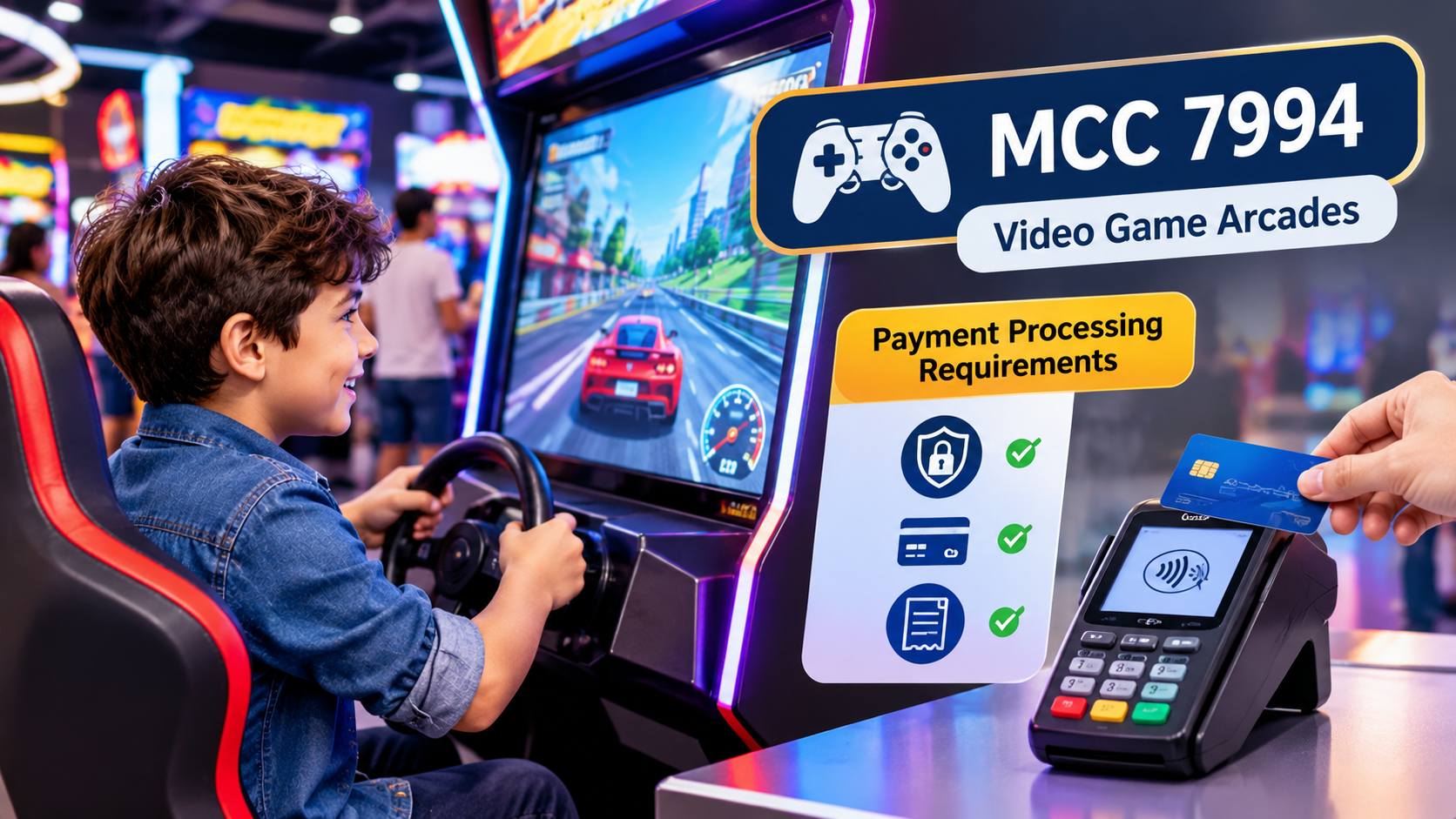

For arcade operators, accepting card payments is essential. Most customers use debit or credit cards to add money to their game cards. If an arcade cannot accept card payments, it may lose customers and sales from the very first day.
However, many arcade owners do not realise that their Merchant Category Code (MCC) can affect their chances of getting payment approval. Arcades usually come under MCC 7994. Because of this code, payment providers may ask for extra documents, hold back part of the sales as a reserve, take several weeks to approve the application, or reject it.
Payment providers do this because arcade businesses can face certain risks. These include payment disputes, fraud, and concerns about whether some games are too similar to gambling.
Finding out about these requirements after a rejection can cause problems. It may delay the opening of the arcade, lead to lost sales, and force the owner to apply with another provider.
MCC 7994 does not mean that an arcade cannot get payment approval. It means that providers may need more information about the business before accepting it. Knowing what they expect can help arcade owners avoid delays and prepare their applications properly.
This guide explains how payment providers check arcade businesses under MCC code 7994, which documents they may ask for, and how to choose the right payment provider. Read on to learn what you need before applying.
Do Payment Providers See the 7994 MCC Code as High Risk?
Not all payment providers treat arcade businesses in the same way. Some see them as regular entertainment businesses and approve them with standard fees and a few extra checks. Others consider MCC 7994 a high-risk category, mainly because some arcade games involve competitions and prizes.
Each bank and payment provider has its own rules for checking businesses. They also follow the rules set by card networks such as Visa and Mastercard.
This means that MCC 7994 alone does not make an arcade a high-risk business. Providers also look at the games you offer, how customers pay, and what prizes they can win.
When an Arcade Is Considered Low Risk
Payment providers are more likely to approve arcades with a simple business model. For example:
- Customers pay to play games at the arcade.
- Customers use game cards or tokens to play.
- Prizes are toys or small items, not cash.
- Most payments are made at the arcade.
- The business has all the required local licences.
These details help providers understand the business and feel more comfortable approving it.
When an Arcade Is Considered High Risk
Some arcades may need extra checks before getting payment approval. This can happen when:
- The business offers online or mobile games, especially games with prizes.
- Customers can win cash or prizes that can be exchanged for money.
- The business has received many payment complaints or chargebacks.
- Customers can add large amounts of money to their game cards.
- The business accepts payments from customers in different countries.
These activities may increase the risk of fraud, payment disputes, or concerns about gambling.
In short, MCC 7994 does not automatically make an arcade high risk. Payment providers mainly check how the arcade operates, what games it offers, and how it handles payments and prizes.
Why Payment Providers Check Arcade Businesses Carefully
Payment providers want to make sure that arcade businesses do not create problems with payments, fraud, or customer complaints. Here are five main risks they look at:
1. Customer payment disputes
A chargeback happens when a customer asks their bank to reverse a payment. For example, a parent may dispute a payment made by their child without permission, or a customer may complain about a game card that stopped working. Too many chargebacks can lead to penalties, held funds, or account closure.
2. Stolen cards
Arcades receive many small payments. Fraudsters may use stolen cards to make small purchases and check if the cards work. Providers want to know that the arcade has checks to prevent such payments. Arcade operators can explore different fraud prevention tools to identify suspicious transactions and reduce unauthorised card use.
3. Games that look like gambling
If players can win cash or prizes that can be exchanged for cash, the arcade may look like a gambling business. Gambling businesses fall under MCC 7995 and have stricter payment rules. Providers may reject an arcade that does not clearly explain its games and prizes.
4. Payments from young customers
Many arcade customers are children and teenagers. Providers want to make sure the business follows local rules on licences and age limits, especially when children use payment cards.
5. Unused customer balances
Customers often add money to their game cards before playing. If the arcade closes, they may ask for refunds on unused balances. To cover this risk, some providers hold back part of the arcade's payments as a reserve.
What You Need to Get Approved Under MCC Code 7994
Each payment provider has its own approval process. However, most providers ask for similar documents and information before accepting an arcade business.
Business Documents
You will usually need:
- Company registration papers
- Details of the company owners and directors
- Proof of your business address
- Business bank account details
- Required arcade licences and permits
Payment providers check these documents to make sure your business is registered and operating legally. Missing or incorrect documents can delay approval. Before applying, arcade operators should understand how to set up a merchant account for an online business and prepare the information providers commonly request.
Clear Customer Policies
Payment providers also want to know what rules you follow when dealing with customers. You should have:
- Refund policy: Explain whether customers can get their money back for unused game credits and whether game cards expire.
- Terms and conditions: Explain the rules for using your arcade and game cards.
- Privacy policy: If you accept online payments, explain how you protect customer information.
Clear policies help prevent customer complaints and payment disputes.
Local Licences and Skill-Game Rules
Some areas require arcades to have special licences. There may also be rules about the age of customers and the types of games you can offer.
Some skill-based games may also need approval or registration with card networks. Ask your payment provider whether these rules apply to your games.
Extra Conditions You May Face
Getting approval does not always mean you can use all your sales money right away. Some providers may hold back part of your payments as a reserve. They do this to cover possible refunds and chargebacks.
If your arcade also has a restaurant, bar, or event booking service, the provider may ask you to use separate payment accounts. Having several business activities can also make the approval process longer.
Be Clear About Your Business
Always give correct information when applying for a payment account. Tell the provider what games you offer, how customers pay, and whether they can win prizes or play online.
Do not leave out any details about your business. A clear and honest application helps the provider understand your arcade and can make the approval process easier.
How the 7994 MCC Code Affects Your Fees and Account
Your MCC 7994 code can affect how much you pay for card payments and what conditions your payment provider sets.
Every card payment comes with a processing fee. Businesses seen as low risk usually get standard fees. Those seen as high risk may have to pay more because payment providers face a greater chance of losing money. Understanding the difference between payment providers and gateways can also help arcade owners evaluate the services included in their payment setup.
Payment providers may also keep part of your sales as a reserve. This protects them against possible refunds and chargebacks, but it means you cannot use that money immediately.
Your payment account also depends on how well you handle customer disputes. Too many chargebacks can lead to extra fees or even account closure. If your account is closed, you may suddenly lose the ability to accept card payments.
It is also important to have the correct MCC code for your business. Your payment provider assigns this code based on your business activities. If the code does not match what your arcade actually does, it can lead to extra checks, penalties, or account closure. If you think your code is wrong, contact your provider. You can also ask for the exact four-digit code if it is not clearly shown on your payment statement.
A well-managed arcade with clear records and fewer payment disputes is more likely to get better payment terms and avoid unnecessary holds on its money.
How FirmEU Can Help Arcades Get the Right Payment Partner
Finding a payment provider that understands arcades can take a lot of time. Pick the wrong one, and you may face rejections, delays, or poor terms. FirmEU helps you avoid that.
We are a matchmaking service that connects businesses with banks and payment providers that suit their industry and location, using a network of 250+ partners. We are not a bank or a payment processor. It doesn’t open accounts, process payments, or hold your money.
Here is how it works. First, you have a free call to explain your business and what you need. Next, you send your documents, and the team helps you through the checks providers require. Then FirmEU introduces you to a partner that fits your business, and you move toward launch.
For an arcade owner, this means you don’t have to apply to providers blindly and hope for the best. You are matched with ones that suit your business. You also get help preparing the documents and policies covered in this guide. The final decision on approval always belongs to the bank or payment provider.
Final Thoughts on MCC 7994 and Payment Processing
For arcade owners, getting payment approval depends on more than just having the correct MCC code. Payment providers also check what games you offer, what prizes customers can win, how you handle refunds, and how often customers complain about payments.
To make approval easier, explain your business clearly, set simple prize rules, and have a clear refund policy. If a provider rejects or delays your application, you can try another provider. Different providers have different rules for arcade businesses.
Prepare your documents and policies before applying. This can help you avoid delays, save money, and open your arcade on time.



FAQs
1. Is MCC 7994 a gambling code?
No. MCC 7994 is used for arcade businesses. Gambling businesses generally use MCC 7995, which has different and stricter payment rules.
2. Can one payment account cover my arcade and food counter?
Sometimes. However, some payment providers may ask you to use separate accounts for different business activities. Check with your provider before applying.
3. How long does payment approval take?
It depends on the payment provider and your application. If your documents are complete and your business is easy to understand, approval may be faster.
4. How do I check my business's MCC code?
Ask your payment provider for the four-digit MCC code assigned to your business. Your bank statement may only show the business category, not the exact code.
5. What should I do if my application is rejected?
Ask the provider why your application was rejected. Check if you need to provide missing documents or explain your business more clearly. You can also contact a payment service like FirmEU to find a provider that accepts arcade businesses.
No. FirmEU is not a bank or financial institution. We operate as an independent matchmaking platform, connecting businesses with verified financial partners. All onboarding, KYC, and approval decisions are handled directly by the financial institution.
Still Have Questions?
Our sales team would be more than happy to assist with any futher inquiries



Contact Us

International Payment Solutions
Find the Right Banking and Payment Processing Partner for Your Business
Tell us about your company, and we’ll match you with the most suitable global banking or payment providers from our verified network.
Get Matched