
Oil & Gas Transactions: Hidden Payment Challenges

garry
May 28, 2026
1
minutes


Oil and gas transactions may look simple from the outside, but the financial side often becomes far more tough than businesses expect. Payments move across countries, suppliers work within different banking systems, and settlements rarely follow a simple path. These oil and gas payment challenges often become more noticeable as operations expand globally.
Many companies focus heavily on operations and logistics at the start. However, payment coordination quietly becomes one of the finest operational pressures later.
At FirmEU, businesses often look for financial structures that support smoother international transaction handling across complicated operational environments.
In this blog, we will explore the hidden payment challenges businesses face within oil and gas transactions and the challenges of international oil and gas payments, and why proper coordination matters.
Handling complex international oil & gas payments?
Get better visibility, smoother settlements, and stronger financial coordination for global operations.

What Oil & Gas Transactions Involve
Oil and gas transactions usually involve much more than a direct payment between two parties. Most operations include suppliers, transport companies, brokers, logistics providers, storage facilities, and international buyers working within the same payment cycle. Due to this, payments often move across several regions before settlement is completed.
The financial side of these operations also relies on international coordination. Different banking systems, currencies, settlement timelines, and regulatory procedures all influence how transactions move. Even when operations appear stable externally, the payment process behind the scenes may still involve various complex stages.
In most cases, one delayed settlement can affect multiple operational areas at the same time. This is why financial coordination plays such a crucial role within oil and gas transactions.
Hidden Payment Challenges
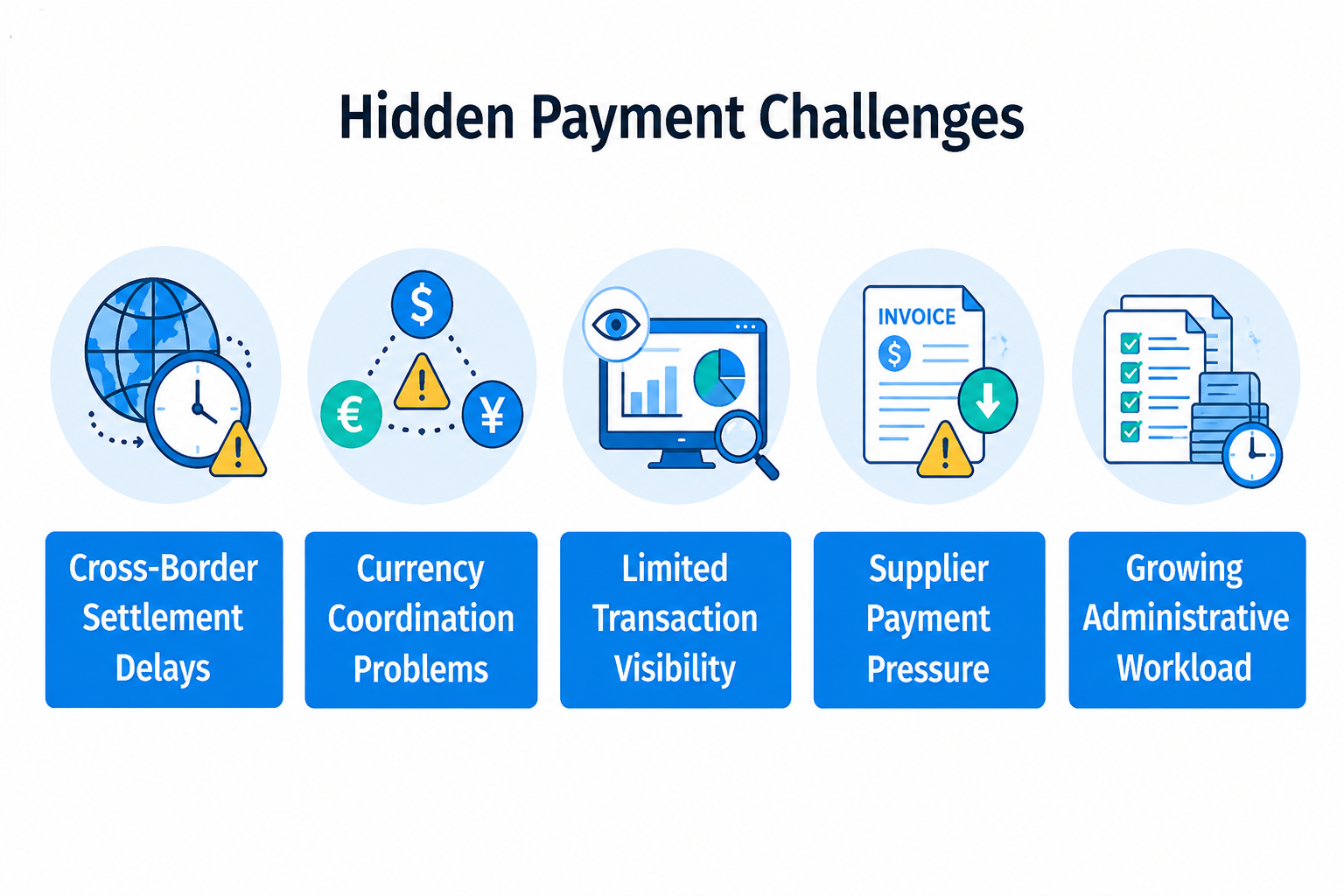
Payment problems within this sector are not always immediately visible. Many businesses continue operating normally while financial pressure quietly builds in the background.
- Cross-Border Settlement Delays
An international payment is never made using just one single channel. In some cases, a transaction may have to go through other banks before landing in the destination account.
This poses problems when there are several international transactions being handled at once in multiple regions. It becomes hard for companies to know when their transactions will be completed, creating cross-border settlement delays that affect operational planning.
- Currency Coordination Problems
Oil and gas companies usually have their transactions in multiple currencies simultaneously. Payments by suppliers might be invoiced in USD, while operational costs are in other currencies.
As a result of insufficient coordination of currency conversions, discrepancies will begin to arise in terms of visibility and reporting of business processes. This is a common challenge when managing multi-currency payments oil gas companies rely on for international operations.
- Limited Transaction Visibility
Many organizations face issues related to the monitoring of payment status during the settlement process. Companies often have to devote extra time to obtaining transaction information manually. Ultimately, a lack of visibility causes pressure on operations due to the inability to monitor transactions. Improving payment visibility oil and gas companies depend on can help reduce this pressure.
- Supplier Payment Pressure
Suppliers operating within this industry typically operate under tight operational timelines. As such, delays or inconsistencies in payments may impact delivery timetables and business partnerships. Even minor issues with supplier settlements may lead to bigger operational pressure, particularly when supplier payment delays oil and gas operations depend on begin affecting critical vendors.
- Growing Administrative Workload
With an increase in transaction volumes, companies tend to settle more transactions in different locations at once. Without proper coordination, firms may use manual methods like spread sheets or emails for reporting purposes. This increases manual workload significantly over time and slows internal coordination. Similarly, petroleum store payment processing can add extra complexity to reporting when multiple storage locations are involved in a single settlement cycle.
Solutions Businesses Focus On
Businesses managing international oil and gas operations usually focus on increasing visibility, financial coordination, and settlement consistency instead of reacting only after issues appear. Many organizations also seek oil and gas international payment solutions that help simplify transaction management across regions.
- Stronger Payment Visibility
Greater visibility during payment processes allows businesses to be able to manage their settlement schedules effectively. Properly managing these transactions makes internal coordination more efficient within an organization.
This also eliminates the necessity of constant monitoring throughout other departments and suppliers.
- Better Currency Management
Effective multi-currency financial management helps reduce settlement and reporting discrepancies across organizations. Companies operating internationally require organized currency processes to maintain smoother transaction handling and better financial visibility. Proper currency management also improves the efficiency of international payments.
- More Structured Financial Coordination
Companies tend to function more effectively if procurement, payments, and reporting processes stay connected. Coordination helps facilitate better communication across departments, preventing confusion in transactions. This is particularly vital after operations have expanded globally.
- Scalable Financial Structures
The system that works for low volumes of transactions might fail when the volume rises. This means that firms need to have systems that can facilitate high volumes without placing strain on the organization. Having well-structured systems makes it easier for companies to grow.
Financial Partners Aligned with Operations
Not all banks or financial institutions provide adequate support to large-scale global payment coordination . This calls for companies to look for financial institutions that can offer greater settlement capabilities and better coordination in cross-border transactions.
At FirmEU, companies will be linked up with banks and financial institutions that meet their international operational and transaction demands.
Why Financial Structure Matters During Growth
A financial process supporting smaller transaction activity may not remain effective once operations expand internationally. Growth naturally improves transaction frequency, supplier coordination, settlement complications, and reporting pressure.
Businesses, therefore, need payment structures capable of supporting larger operational environments without creating additional friction internally.
- Smaller Teams Feel More Pressure
A growing firm with few internal finance employees is likely to face difficulties with coordination at an early stage. When a small team handles expanding international transactions, it may face problems of visibility and settlement at once. This will delay coordination immensely.
- Scalability Matters
When the volume of international transactions grows, there is a need for proper coordination in financial management. Otherwise, it will become difficult to handle payments.
Conclusion
In conclusion, it is clear that transactions involving oil and gas are far more complex than most companies realize from a financial perspective. International oil and gas transactions require careful coordination between suppliers, banking systems, and currencies to maintain operational efficiency.
Companies that are better able to deal with these complications generally prioritize visibility, payments, and financial coordination well before the process becomes difficult. As the market activity continues growing, organized transaction management will always be tied closely to operational efficiency.
Growing international operations can quickly increase payment pressure.
FirmEU helps businesses improve cross-border transaction coordination, banking support, and scalable financial structures.



FAQs
Why are oil and gas payments more complex compared to normal business payments?
This type of payment involves overseas suppliers, multiple currencies, intermediary banks, and large settlement amounts.
Why might there be delays in the international settlements process?
There can be delays due to compliance checks, intermediary bank involvement, currency synchronization, or lack of visibility in transaction management.
Why is visibility essential during the payment process?
Visibility plays an integral role in enabling businesses to manage their settlements, pay their suppliers, and maintain their cash flow effectively.
Are growing companies experiencing coordination challenges?
Yes. With increased overseas business operations, coordination will naturally become more complicated without adequate organization.
How does FirmEU assist companies operating in this industry?
FirmEU connects companies with suitable banking and payment partners for international business operations.
No. FirmEU is not a bank or financial institution. We operate as an independent matchmaking platform, connecting businesses with verified financial partners. All onboarding, KYC, and approval decisions are handled directly by the financial institution.
Still Have Questions?
Our sales team would be more than happy to assist with any futher inquiries



Contact Us

International Payment Solutions
Find the Right Banking and Payment Processing Partner for Your Business
Tell us about your company, and we’ll match you with the most suitable global banking or payment providers from our verified network.
Get Matched