
What Is Payment Cascading and How Does It Reduce Failed Transactions?

Garry
July 13, 2026
1
minutes


Every failed online payment represents a missed business opportunity. While some payments are declined because of insufficient funds or expired cards, many fail due to temporary processor issues, network interruptions, or bank-related mistakes. Payment cascading helps companies recover these transactions by automatically retrying payments through another available processor instead of ending the checkout process immediately.
As digital payments continue growing across global markets, improving payment authorization rates has become a priority for companies of every size. A well-designed payment infrastructure reduces unnecessary payment failures and creates a smoother checkout experience for customers.
FirmEU helps businesses implement intelligent payment solutions that enhance transaction success while supporting long-term payment performance.
Understand Your Payment Performance
FirmEU helps businesses improve payment operations with intelligent routing, trusted banking partners, and scalable payment solutions designed for long-term growth.

What Is Payment Cascading and How Does It Work?
The payment cascading process automatically retries a transaction when the first authorization attempt fails by routing it through another available processor. Instead of asking the customer to repeat the payment, the system redirects the transaction to a different payment processor in real time. This allows businesses to recover payments that might otherwise be lost due to temporary processing issues.
Where traditional payment processing would stop the transaction with a single authorization failure, payment cascading adds a level of protection. Businesses link several payment processors into their payment network, enabling the network to determine where to send the payment after the initial attempt has failed.
A typical payment flow works like this:
- A customer submits payment at checkout.
- The primary payment processor attempts authorization.
- If the transaction fails for a recoverable reason, payment failover automatically activates.
- The payment is securely redirected to another connected processor.
- If the second attempt succeeds, the purchase is completed without interrupting the customer’s checkout experience.
Automated payment processing will result in a higher payment success rate since most failures are not permanent but temporary. Businesses get another chance to complete the transaction without involving their customers much by using multiple payment providers effectively.
Knowing how payment cascading works is only part of the picture. To see its full value, it’s important to understand why online payment transactions fail in the first place.
What Payment Transactions Fail
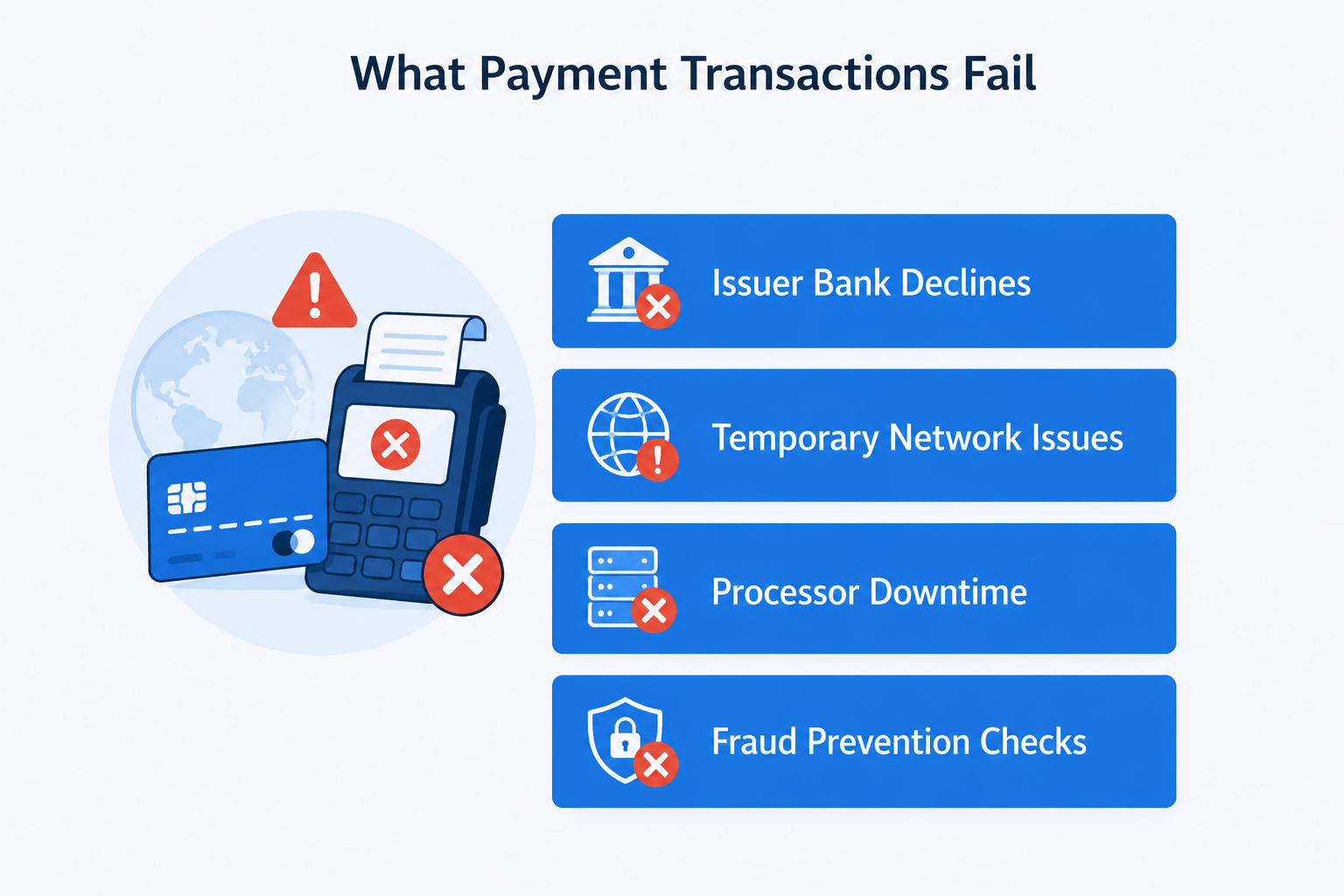
Not every failed payment means the customer entered incorrect card details or has insufficient funds. In most cases, the payment could have been completed if it had been processed through another route. Knowing why transactions fail helps companies address where improvements can be made and understand the most common causes of international payment failures before optimizing their payment routing strategy.
- Issuer Bank Declines
There are many reasons for a bank to reject a legitimate transaction, among them a security check, a spending limit, strange buying behavior, or an internal authorization policy. Such rejections are not necessarily permanent, and that is why trying again through another processor may result in an authorization.
- Temporary Network Issues
Payment processing relies on various systems working together in real time. The absence of network connection or any other temporary network problem between banks and payment processors may result in a failed transaction despite having enough funds.
- Processor Downtime
As is the case with all technology systems, processors for payments may at times need maintenance or face service disruptions unexpectedly. If companies only use one processor to accept payments, these service interruptions may lead to lost sales.
- Fraud Prevention Checks
Payment providers use automated fraud detection system to protect companies from suspicious activity. However, these systems may sometimes flag genuine customer transactions, resulting in false declines. Enhancing failed transaction recovery allows businesses to recover many legal paumemts without requiring customers to begin the checkout process again.
Many payment failures are temporary rather than permanent. Instead of accepting every decline as a lost sale, businesses can use smarter payment strategies to recover more successful payments while improving the overall customer experience.
Key Benefits of Payment Cascading
Implementing payment cascading is about more than recovering failed payments. It helps businesses build a more trusted payment infrastructure that enhances transaction success, protects revenue and delivers a smoother checkout experience by improving payment operations for growing businesses. As online payment routing strategy becomes a competitive advantage rather than just a technical feature.
- Improves Payment Authorization Rates
Automatic reattempt for processing through another processor enhances the possibility of a successful transaction. With payment routing strategy, businesses can process more genuine transactions without having customers attempt the transaction again.
- Strengthens Failed Transaction Recovery
Temporary issues related to the processors, issuer decline, and network disruptions do not always mean failing transactions. A well-designed payment routing strategy improves failed transaction recovery, helping businesses recover transactions that might otherwise result in lost revenue.
- Creates a Better Customer Experience
Customers expect payments to happen fast and seamlessly. Reducing the number of declines means creating better experiences for customers during check out.
- Reduces Revenue Loss
With payment routing strategy, businesses stand a chance to save each additional sale which would otherwise have been lost through declining the transaction.
- Builds More Reliable Payment Operations
Relying on a single payment processor creates unnecessary risk. Intelligent payments can continue even if one processing route experienced temporary problems. FirmEU assists businesses implement payment solutions that support trusted transaction routing while improving overall payment performance.
Payment cascading delivers the greatest value when it forms parts of a wider payment strategy designed to enhance authorization rates, operational reliability, and long-term business growth.
When Should Busiesses Use Payment Cascading?
Not every business needs payment cascading from day one. However, a payment volumes increase and customers begin purchasing from different regions, relying on a single payment processor can result in more unnecessary declines. Payment cascading for online payments is especially valuable for businesses processing large transaction volumes, where even a small improvement in authorization rates can generate significant additional revenue over time.
Payment cascading is particularly valuable for:
- Global Businesses: Businesses that serve customers internationally tend to deal with different payment infrastructures, banks, issuers, and preferences. Intelligent payment routing will optimize payment success through different international markets.
- High-Volume Merchants: Companies with high daily transaction volume have a better chance of recovering failed payments due to processing problems.
- Multiple Payment Providers: Businesses already using several payment processors can take advantage of payment cascading to optimize their payment transactions.
- Subscription-Based Businesses: Ineffective recurring payments may result in unwanted customer churn. Payment routing will help recover eligible recurring payments.
- Businesses Expanding Into New Markets: When entering new markets, businesses are faced with new acquiring banks, payment options, and authorization patterns. It is important for businesses to use a cascading payment processor in order to adjust accordingly.
As payment operations become more complicated, businesses need infrastructure that can adapt without interrupting the customer experience. FirmEU helps businesses implement intelligent payment solutions that support scalable payment routing, improve authorization rates, and reduce unencessary payment failurtes as they grow.
Choosing the Right Cascading Payment Processor
Implementing payment cascading is only effective when the underlying payment infrastructure is designed to support intelligent routing. Selecting the right provider involves more than comparing transaction fees and choosing the right payment provider for your business model. Companies should evaluate how well a processor supports reliability, scalability, and payment recovery across various markets.
Before making a decision, consider the following factors:
- Intelligent Payment Routing: The payment processor must automatically reroute payments to other acquirers wherever possible, all without disrupting the customer’s checkout process.
- Regional Payment Coverage: Choose processors that have good acquiring infrastructure in the regions from which your customers come. Increased regional coverage increases the chances of getting approved.
- Real-Time Monitoring: Information on how to analyze your failed payments and optimize their performance is very important for any business.
- Scalable Infrastructure: As your number of transactions increases, your payment processor must maintain optimal performance without any need for large adjustments to the system.
- Flexible Integrations: Seamless integration of your payment processor with your checkout and other systems ensures smooth work and further development.
Rather than relying on a one-size-fits-all approach, FirmEU helps businesses implement payment infrastructure tailored to their operational needs. By merging intelligent routing, multiple acquiring connections, and scalable payment solutions, FirmEU enables businesses to reduce failed transactions while building a more reliable payment ecosystem for long-term growth.
Conclusion
Businesses can reduce failed transactions with payment cascading, improving payment success without disrupting the customer experience. By intelligently rerouting eligible transactions, businesses can reduce failed payments, recover lost revenue, and strengthen overall payment performance. Implementing the right payment tactic is equally crucial as choosing the right technology. With scalable payment infrastructure and intelligent routing solutions from FirmEU, businesses can build a more reliable payment ecosystem that assists long-term growth across domestic and international markets.
Turn More Approved Payments Into Revenue
Whether you're expanding internationally or handling higher transaction volumes, FirmEU provides flexible payment infrastructure built for growing businesses.



FAQs
What is payment cascading?
Payment cascading refers to the method of trying a failed transaction on another payment processor automatically. This technique will not lead to the decline of the payment but will try one more time to authorize a transaction using another route.
How does payment failover differ from payment cascading?
Payment failover means a switching of a failed transaction to another processor. Payment cascading implies the use of payment failover and intelligent routing to increase the number of successful transactions.
Can payment cascading reduce payment failures?
Yes, payment cascading allows you to recover the eligible payments because there are many situations when the payment fails due to temporary problems of the processor, network issues, or the issuers themselves.
Which businesses benefit most from payment cascading?
The companies which process large amounts of transactions, work in international commerce, have subscription payments, or collaborate with several payment processors can benefit the most from payment cascading.
What should I look for in a cascading payment processor?
Choose a provider with intelligent routing, multiple acquiring connections, strong regional coverage, real-time reporting, and scalable infrastructure that can support future business growth.
No. FirmEU is not a bank or financial institution. We operate as an independent matchmaking platform, connecting businesses with verified financial partners. All onboarding, KYC, and approval decisions are handled directly by the financial institution.
Still Have Questions?
Our sales team would be more than happy to assist with any futher inquiries



Contact Us

International Payment Solutions
Find the Right Banking and Payment Processing Partner for Your Business
Tell us about your company, and we’ll match you with the most suitable global banking or payment providers from our verified network.
Get Matched