
How to Open a Business Bank Account for an International Company

Garry
April 24, 2026
1
minutes


For an international company, opening a business bank account sounds simple at first. Most founders assume that once the company is registered, the process to open an international business bank account will be quick and straightforward.
But in reality, this is exactly where things begin to slow down. From what we’ve seen working with international businesses at FirmEU, opening a bank account is not just about submitting documents and getting approval. It’s a process shaped by strict compliance checks, detailed verification procedures, and different regulations across jurisdictions. And this is where many businesses face delays, repeated document requests, or even rejection straightaway. In most cases, the issue is not that the business itself is invalid. It’s that the setup, whether the company structure, documentation, or even the choice of bank, does not fully align with what financial institutions expect under their compliance frameworks.
This is the reason why it helps to look at banking as more than just a requirement. It's the foundation of how your business will receive payments, manage international transactions, and operate smoothly while staying compliant with local laws. Choosing from the right international banking solutions for businesses and understanding your options to open international business account setups early can make this transition much smoother. In this article, we'll break down how international business banking actually works, what challenges expect, and how to approach the process in a way that reduces delays and improves your chances of approval from the start.
Start strong with the right banking setup.
If you're planning to expand globally, choosing the right cross-border banking solutions early can save you time, money, and unnecessary delays.

What Is an International Business Bank Account?
An international business bank account helps companies send, receive, and manage funds across different countries. It is specifically designed for businesses operating in multiple countries or dealing with global clients and partners. Standard accounts are limited in handling multiple currencies, while international business bank accounts are designed to support multi-currency transactions more efficiently, often with better FX handling and lower conversion friction. This makes them an ideal bank account for international business operations looking to scale across multiple markets. For growing companies, comparing international accounts for business side by side helps identify which provider offers the best support for multi-currency operations.
To better understand how global businesses manage multiple currencies efficiently, explore multi-currency account solutions.
Impact of Choosing the Right Banking Partner
This is why understanding different international banking solutions for businesses early in the process matters. Opening the right bank account for international business directly impacts how smoothly your operations run.
Many International companies face issues not because they don’t have a business account, but because they choose the wrong banking partner. Knowing the right banking partner based on your operations base, target countries, and business type is very important to avoid bigger issues in cross-border business banking.
If you choose the right banking partner, it will help you with:
- Managing cross-border payments smoothly
- Building trust & credibility with clients and partners
- Keeping business and personal finances separate
- Staying compliant with tax and regulatory requirements
The right partner also ensures access to reliable international payment methods, so your business can send and receive funds without unnecessary friction. In so many cases, poor banking decisions lead to higher fees, payment delays, and even account suspensions. This usually happens when the banking setup does not align with the business model.
Requirements You Should Be Prepared For
Opening a business bank account internationally involves detailed verification. Banks are required to follow strict KYC (Know Your Customer) and AML (Anti-Money Laundering) regulations. Understanding common international business bank account requirements in advance can help you prepare the right documents before you even apply. If you are not a resident of the company's base country, opening a non-resident business bank account requires meeting all compliance requirements to avoid delays or potential account restrictions.
Banks usually ask for the following things:
- Company registration documents
- ID proofs of the director and the shareholder
- Business activity proofs
- Registered business address
- Tax Identifications details
From our experience in this industry, we’ve noticed, the biggest delays happen when the information submitted does not match across documents. For example, differences in company name, addresses, or ownership details can trigger additional verification checks. Before you apply, make sure all your documents are consistent and reflect the same company structure. If your business handles customer data, it’s worth reviewing GDPR compliance in payment processing to understand transparency, consent, and security obligations.
Step-by-Step Process to Open a Business Bank Account
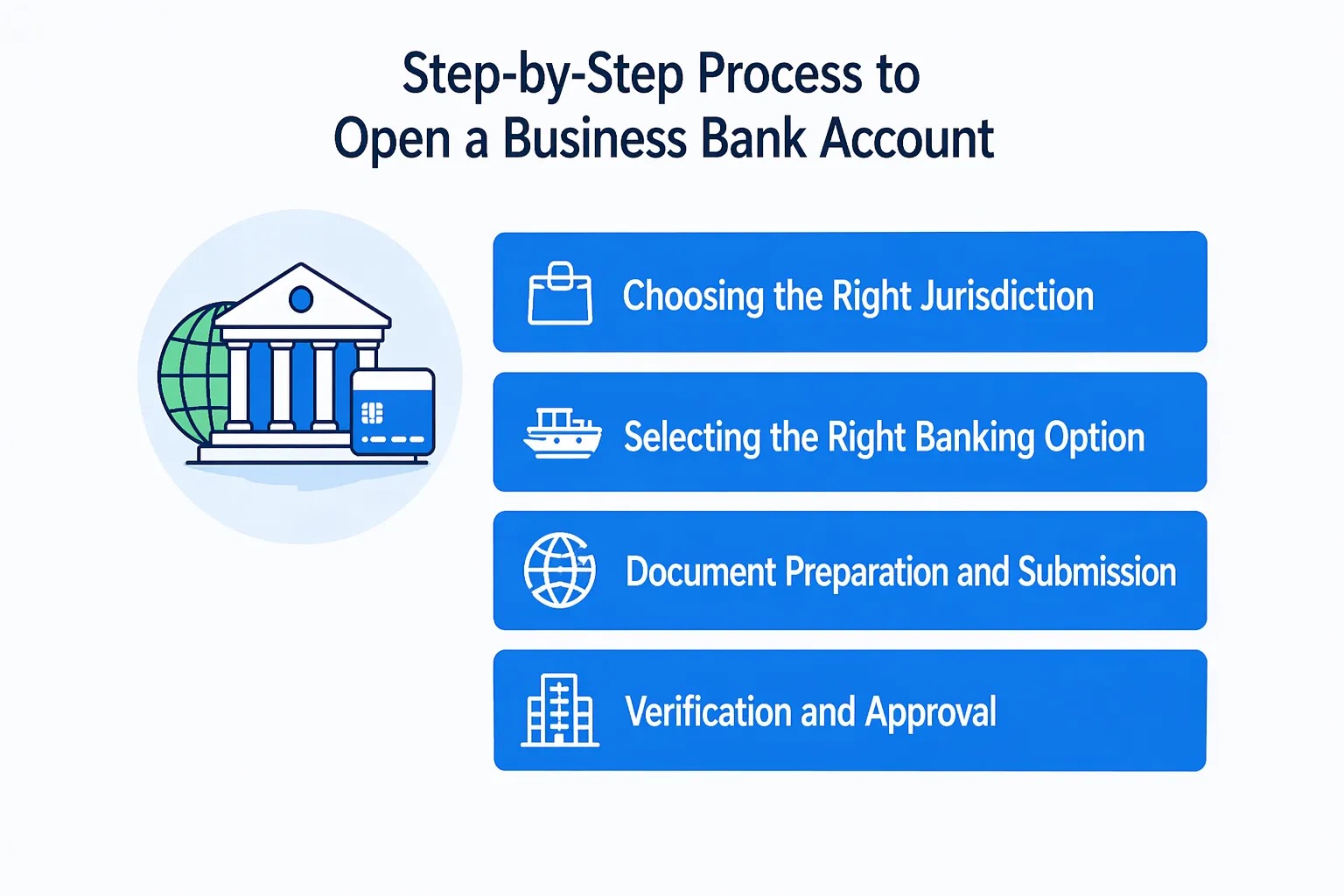
Opening an account is not just about submitting your documents and ID proofs. It is a structured process where each step affects approval chances. This is why following a structured approach is important.
Choosing the Right Jurisdiction
Your company's registration location plays a key role in determining banking options. Some countries have stricter requirements, while others offer more flexibility for businesses looking to open an international business bank account.
If you’re experiencing transaction issues, it helps to understand the common causes of cross-border payment delays and how they impact processing timelines.
Selecting the Right Banking Option
You typically have two main options:
-Traditional banks that offer full services but require more verification
- Digital and fintech providers that offer faster onboarding and remote access
The right choice depends on the type of your business, your transaction volume, and your operational needs. Many businesses compare different international banking solutions before deciding which provider best supports their global operations and helps them open an international business bank account efficiently. Comparing international payment solutions for businesses at this stage also helps you understand transfer costs and processing times before committing to a provider.
Document Preparation and Submission
Once your documents are ready, the next step would be submitting your application. This can usually be done online or by visiting a bank branch.
Fintech platforms make things easier by allowing fully remote applications. Traditional banks, on the other hand, may ask you to visit in person or complete additional verification steps.
Verification and Approval
This is the stage where most of the delays happen. Banks take their time to carefully review your application, mainly focusing on:
- The ownership structure
- Source of funds
- Nature of your business activities
Clear, consistent, and transparent information significantly improves your chances of approval.
Common Challenges International Companies Face
Opening a non-resident business bank account is not always simple. There are a few common hurdles businesses run into:
- Many banks prefer companies with a local presence or local directors
- Complex ownership structures can raise compliance concerns
- Some industries are considered high-risk
- Cross-border operations often lead to longer verification timelines
In most cases, applications are not rejected because the business is invalid. In most cases, the issue is that the business model or structure is not clearly presented.
Proven Strategies to Get Approval Faster
Based on what we have seen with international businesses, a few practical steps can make the process much smoother. Start by keeping your business model simple and easy to understand. Banks are more comfortable approving structures that they can quickly verify. Avoid adding unnecessary layers to ownership unless required. Make sure all your documents match perfectly. Even small differences in names, addresses, or company details can slow things down. It also helps to show real business activity. A working website, client contracts, or invoices can build trust and reduce risk in the eyes of the bank. Choosing the right banking partner is just as important. Not all banks support international businesses in the same way. Many providers offer different international banking solutions, so it is important to focus on what fits your business needs instead of simply choosing a well-known name. Reviewing several international payment solutions for businesses side by side, rather than settling for the first option, often leads to better long-term fit. For businesses operating in the EU, understanding how to secure SEPA payments for merchants helps improve payment safety and reliability.
If you are planning long-term growth, setting up your structure properly from the start can save you a lot of trouble later.
Operational Considerations Most Businesses Overlook
Many businesses focus only on opening the account and forget about day-to-day operations. But your cross-border business banking setup directly affects how your business runs. This includes having access to reliable international payment methods for everyday transactions. Choosing the right bank account for international business activities can significantly improve operational efficiency and support long-term international growth.
- Smooth payment collection from international clients
- Low-cost currency conversions
- Easy interaction with accounting and payment tools
- Reliable international banking solutions that support long-term growth
Having access to dependable payment methods for international business transactions, alongside efficient international accounts for business, keeps operations running without unnecessary delays. Ignoring these factors can create unnecessary friction and slow down your growth over time.
Common Misconceptions About International Banking
Many founders are new to the industry and have this misconception in their heads that opening an international business bank account is just a quick step after registering a company. In reality, it is one of the most important parts of setting up an international business. This misconception often causes delays for founders who assume they can open international business account access instantly. Another common myth is that any bank will do the job. In practice, choosing the wrong banking partner can create significant challenges. Some also believe fintech platforms can fully replace traditional banks. While they offer flexibility, the right choice depends on your business model and long-term plans.
The Importance of Right Banking Partner
A banking partner does more than just keep your money stored. It has a big impact on how smoothly you can manage your transactions, stay compliant, and support efficient cross-border business banking operations.
From the projects we’ve taken care of, we have noticed that businesses that choose the right banking setup at the initial stage face fewer disruptions and sometimes no issues at all, and grow smoothly. That is the reason why banking should not be something you treat as a one-time task. It should be part of your overall business strategy.
Final Thoughts
Opening a business bank account for an international company takes smart planning and attention to detail. It may seem complex at first, but once you understand the process, it becomes much easier to avoid common mistakes.
With the right structure, proper documentation, and a suitable banking partner, you can build a system that supports your global operations without delays. From choosing the right jurisdiction to comparing payment methods for international business transactions, every step matters for long-term success.
Are you confused about which banking partner to choose?
At FirmEU, we help you choose the right jurisdiction, prepare your documents, and connect with banking partners that match your goals. Get started with FirmEU and set up your international banking the right way from day one.



FAQs
Can I open a business bank account remotely in another country?
Yes, many fintech providers allow remote account opening, making it easier to open an international business bank account. However, traditional banks may still require physical verification.
How does digital banking for online businesses help international companies?
Digital banking for online businesses offers faster onboarding, remote access, and simplified account management compared to traditional banks.
Do I need a local address?
It depends on the bank. Some banks require a local presence, while others offer more flexibility for International founders.
Why do international business bank account applications get rejected?
Rejections often happen due to inconsistent documents, unclear business models, or compliance risks flagged during verification.
What are the best options for startups?
Fintech and multi-currency accounts are often a better fit for startups and remote-first businesses.
No. FirmEU is not a bank or financial institution. We operate as an independent matchmaking platform, connecting businesses with verified financial partners. All onboarding, KYC, and approval decisions are handled directly by the financial institution.
Still Have Questions?
Our sales team would be more than happy to assist with any futher inquiries



Contact Us

International Payment Solutions
Find the Right Banking and Payment Processing Partner for Your Business
Tell us about your company, and we’ll match you with the most suitable global banking or payment providers from our verified network.
Get Matched