
Finding The Right Collaboration Partners In Oil & Gas

Garry
June 1, 2026
1
minutes

Searching for the right collaboration partner in oil and gas is an important decision for businesses managing complicated operations, international transactions, and large-scale supply activity. Finding the right business partners can influence operational efficiency, payment partnerships, shipment timelines, and long-term business stability.
A partner that aligns with operational and financial requirements can support smoother coordination across suppliers, logistics, and international markets. On the other hand, the wrong collaboration may create delays, communication gaps, and operational pressure that affect the wider business activity over time. These issues often become more visible when businesses face payment challenges in oil and gas operations.
This blog explains how oil and gas businesses identify the right partners for collaboration, what factors companies usually monitor before partnering, and how this supports more stable operations.
Strong operations need strong financial support.
The right banking and payment infrastructure can help improve coordination, transaction visibility, and long-term stability.

Why the Right Partner Matters
Operations of oil and gas businesses rarely operate alone. It relies on suppliers, logistics providers, financial institutions, and regional operators working together smoothly. That is why even a one-week partnership can affect broader operational activity very quickly.
Businesses, therefore, pay attention to reliability, operational fit, and international capability rather than choosing partners only based on pricing or availability. Solid collaboration usually supports smoother workflows, better coordination, and fewer operational disruptions over time, especially when working with reliable oil and gas business partners.
- Delayed communication can affect shipment planning, supplier coordination, and operational timelines together.
- Partners without international experience may struggle with cross-border synergy and global operational requirements.
- Inconsistent settlement handling often creates pressure across supplier relationships and transaction activity.
- Reliable partnerships help companies reduce avoidable operational delays and teamwork issues internally.
What Businesses Check Before Moving Forward
Choosing a collaboration partner in oil and gas usually includes more than reviewing services. Businesses also look at how the partner performs during the ongoing operations, international coordination, and high-pressure situations. A partner may look suitable initially but still create operational problems later if the structure is not reliable enough.
Experience within commodity-focused industries often becomes important because oil and gas operations involve complicated workflows, larger transaction activity, and cross-border coordination regularly. Businesses, therefore, prefer partners that already understand these operational environments and can operate as dependable oil and gas collaboration partners.
Financial stability also plays an essential role during evaluation. Businesses avoid partnerships that may create settlement uncertainty, delayed execution, or operational inconsistency during long-term activity, making it important to work with reliable international banking partners.
Communication standards are equally important. Slow responses during shipment activity or settlement coordination can affect broader operational timelines very quickly. Because of this, businesses usually prefer partners that maintain faster and clearer communication during ongoing operations.
How Businesses Usually Find Partners
Oil and gas businesses usually follow a structured approach while selecting collaboration partners. The process often involves industry relationships, operational evaluation, and international capability checks before entering long-term agreements, particularly when building cross-border partnerships in oil and gas.
- Industry Networks And Referrals
Many organizations tend to use the network of contacts from the industry, suggestions by suppliers, as well as business contacts when looking for operational partners. Using contacts can help minimize the amount of risk, and connecting with operational partners who have some understanding of commodity-based operations.
- Operational Requirement Matching
Business organizations are increasingly becoming concerned about whether an organization will fit into their operational style, rather than selecting those which are available. An organization which is dealing with international shipping and larger transactions needs more structure in its operations.
- International Capability Checks
Business organizations take into account geography, coordination across borders, and the handling of transactions prior to considering a partner. Organizations that operate internationally will need partners who will handle global operations.
What Businesses Should Evaluate Before Partnering
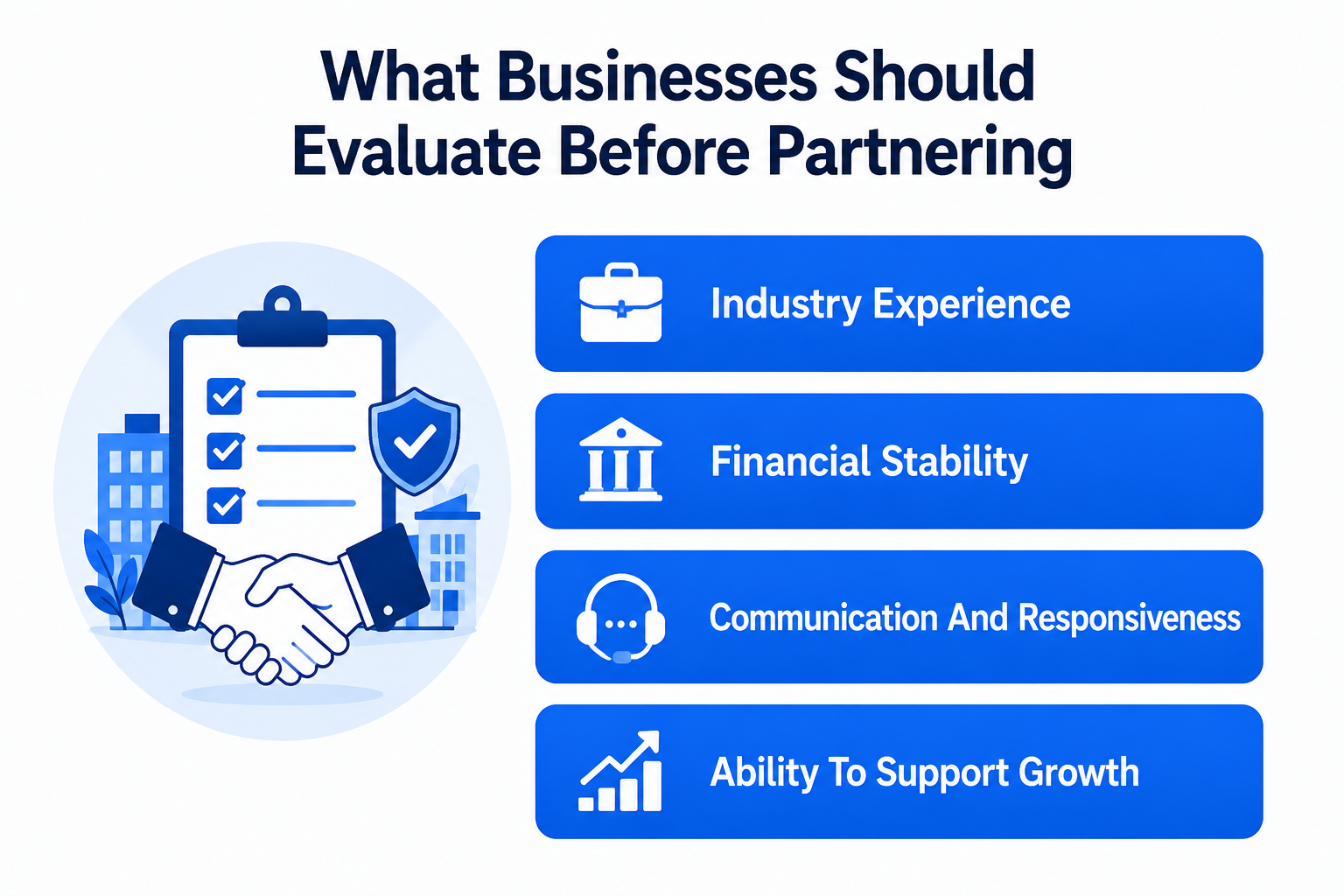
Choosing a collaboration partner in oil and gas usually involves more than reviewing services or pricing. Businesses often evaluate whether the partner can support operational pressure, international coordination, and long-term activity without creating disruptions later, which is essential for successful oil and gas partnerships.
- Industry Experience
Such operations include complicated supply chains, international transactions, and large-scale partnerships. Teams familiar with commodity-centric environments usually manage operational expectations more efficiently during active business activity.
- Financial Stability
Businesses also review whether a partner operates with long-term stability and has access to reliable international banking support. This is because an unstable partner may create settlement uncertainty, delayed execution, or operational disruptions that eventually affect broader workflows.
- Communication And Responsiveness
Fast communication becomes key during shipment activity, supplier synergy, and transaction handling. Businesses usually prefer partners capable of answering quickly during operational pressure instead of slowing teamwork.
- Ability To Support Growth
Partnerships that support current activity may not remain effective once operations expand internationally. Businesses, therefore, prefer scalable partners capable of handling larger transaction activity and broader operational coordination over time.
Signs Of A Strong Collaboration Partner
Reliable collaboration partners usually support operations without creating unnecessary delays or coordination pressure. Businesses often identify strong partners through consistency, communication quality, and operational stability during active business activity.
- Operational Alignment
Good partners have an excellent understanding of transaction processes and operational synchronization. This helps organizations ensure smoother operation through all aspects, including suppliers, logistics, and finance.
- Stable Coordination
Effective communication and efficient conflict resolution processes become important in shipment processes and under the pressure of operations. Stable partnerships typically contribute to avoiding any unnecessary disruption in operational processes.
- International Capability
Organizations with a global presence typically appreciate partners who can operate efficiently in their international processes without disrupting any other aspect of business operations.
- Long-Term Reliability
Short-term considerations do not provide organizations with long-term benefits when it comes to the stable operation of business processes.
The Financial Side Of Collaboration
Financial coordination plays a major role in oil and gas operations because suppliers, transport providers, and operational partners all depend on stable settlements and predictable payment timelines. Delayed transactions can affect shipment schedules, supplier confidence, and broader operational activity very quickly.
- Payment Stability: Oil and gas companies usually manage bulk transaction activity across multiple operational stages. Stable settlement handling helps maintain hassle-free synergy between suppliers, logistics providers, and operational teams.
- Cross-Border Complexity: Multi-currency accounts include different currencies, banking systems, and settlement environments. Companies, therefore, need solid visibility across payment movement and global transaction coordination.
- Suitable Financial Support: A generic financial structure may not support the operations efficiently. Companies usually prefer oil and gas financial partners aligned with their transaction activity and operational requirements.
How Strong Partnerships Help Businesses
Strong collaboration partnerships often improve more than daily coordination alone. Businesses usually experience smoother operational flow, better financial visibility, and fewer disruptions when reliable partners support different stages of activity. Over time, strong partnerships also help businesses manage operational pressure more efficiently during international expansion and higher.
- Smoother Operations
Coordinated operations involving the supply chain, logistic partners, and financial transactions make for improved business operation processes when performing daily activities. Business entities do not have to spend so much time dealing with any avoidable problems arising from poor coordination of operations within the organization.
- Fewer Delays
Efficient coordination in terms of finance and logistical handling ensures that business entities suffer fewer disruptions resulting from any form of problems experienced in the financial transactions and operational logistics involved.
- Better Scalability
Business organizations looking to expand in terms of their operations will need partners who can support increased levels of transaction operations as well as improved operational coordination. Increased scalability of partnerships helps businesses grow effectively.
- Improved Financial Visibility
Financial coordination plays an integral role in ensuring businesses enjoy increased visibility regarding transaction movements and operational finances. Improved financial coordination ensures smooth operational coordination in the long run.
Conclusion
To conclude, choosing the right partners for collaboration is closely connected to operational stability, supplier relationships, international transactions, logistics coordination, and long-term business performance across different markets. Businesses that require specialized financial support for oil and gas operations can benefit from working with experienced partners that understand the industry's unique requirements.
As oil and gas operations become more connected globally, businesses increasingly require partners that can support scalability, faster coordination, and stable operational performance over time. Companies that prioritize reliable oil and gas partnerships early often experience smoother workflows and fewer disruptions as operations expand internationally.
Strong partnerships support stronger business performance.
Reliable banking and payment infrastructure can help improve coordination, visibility, and operational efficiency across international markets.



FAQs
How do oil companies choose partners?
The majority of companies evaluate operational fit, industry experience, international capability, and long-term reliability before entering into partnership agreements.
Why does industry experience matter?
Partners familiar with commodity-focused operations usually manage operational coordination and international workflows more efficiently.
What causes partnership-related delays?
Poor communication, unstable settlements, weak coordination, and limited international capability often create operational disruptions.
Why is payment coordination important?
Stable payment handling supports supplier relationships, shipment timelines, and smoother operational continuity across ongoing business activity.
What makes a partnership reliable?
Strong communication, operational consistency, financial stability, and scalable support usually define reliable long-term partnerships among oil and gas business partners.
No. FirmEU is not a bank or financial institution. We operate as an independent matchmaking platform, connecting businesses with verified financial partners. All onboarding, KYC, and approval decisions are handled directly by the financial institution.
Still Have Questions?
Our sales team would be more than happy to assist with any futher inquiries



Contact Us

International Payment Solutions
Find the Right Banking and Payment Processing Partner for Your Business
Tell us about your company, and we’ll match you with the most suitable global banking or payment providers from our verified network.
Get Matched