










.jpg)











%20(1).jpg)



.jpg)

.jpg)

.webp)







.webp)
.webp)





.webp)
%20(1).webp)
.webp)
.webp)

.webp)
.webp)








.webp)

.webp)

.webp)




















Still Have Questions?
Our sales team would be more than happy to assist with any further inquiries

FirmEU connects your business with verified global banks and payment partners to simplify cross border transactions. Through our network of 250+ trusted institutions, we match your business with the right global payment solutions, enabling secure, structured access to international financial infrastructure and reliable global payment systems.
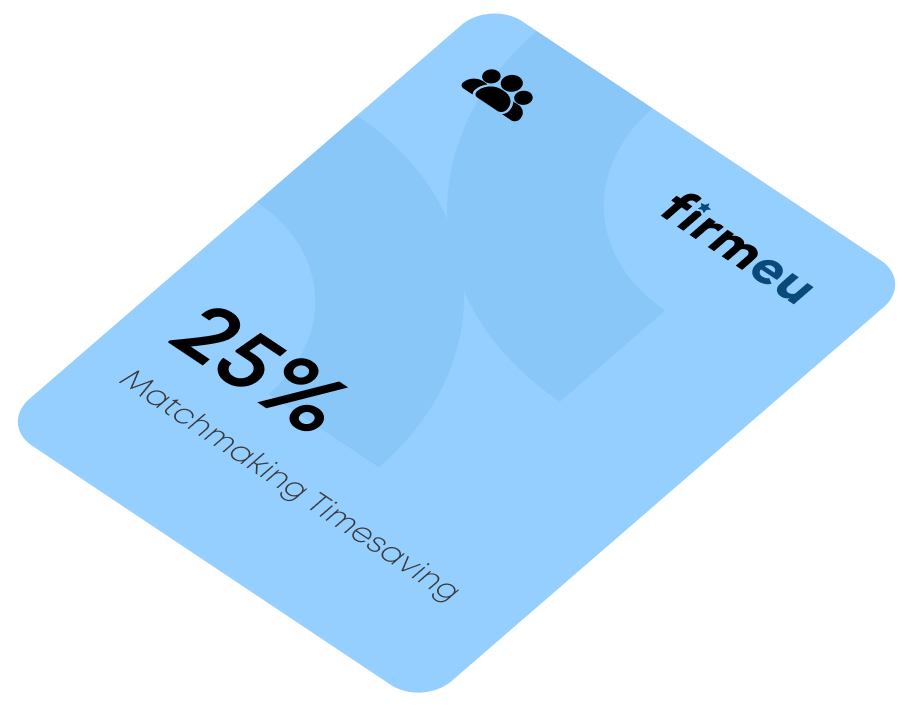
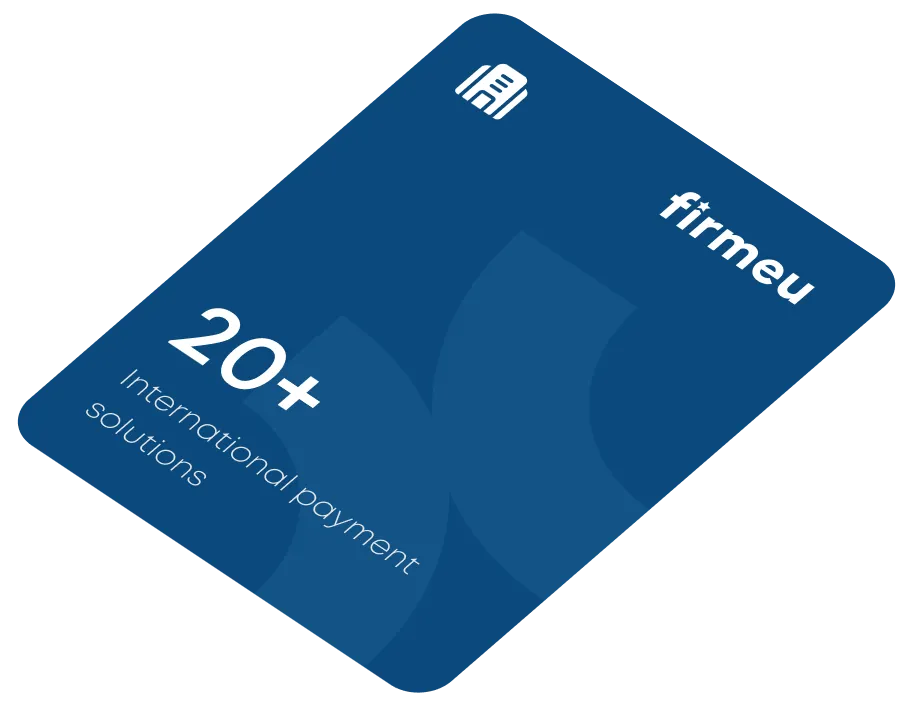

Connect with global payment partners aligned with your cross-border operational and settlement requirements.
Access processors that support online, recurring, and high-volume transactions for specialized or complex industries.
Match with banks that reliably onboard your business type and jurisdiction worldwide.
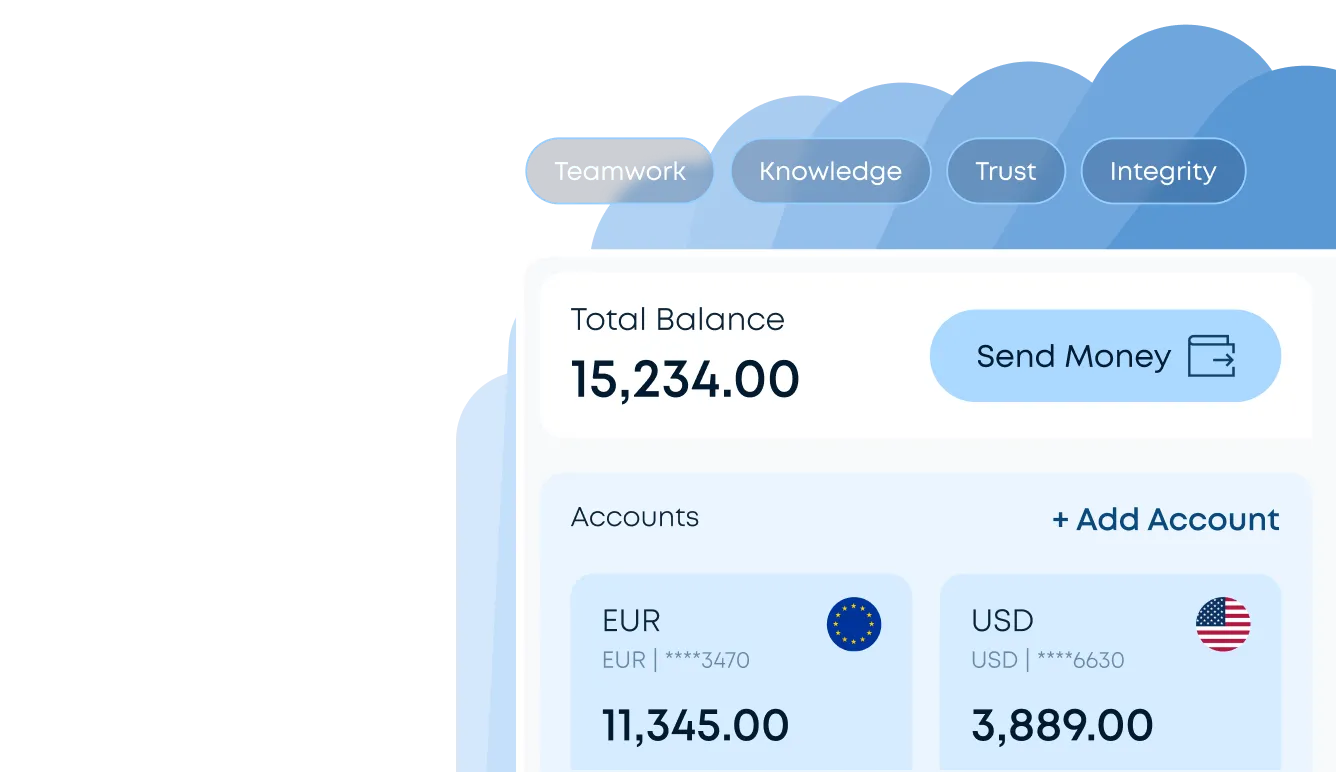



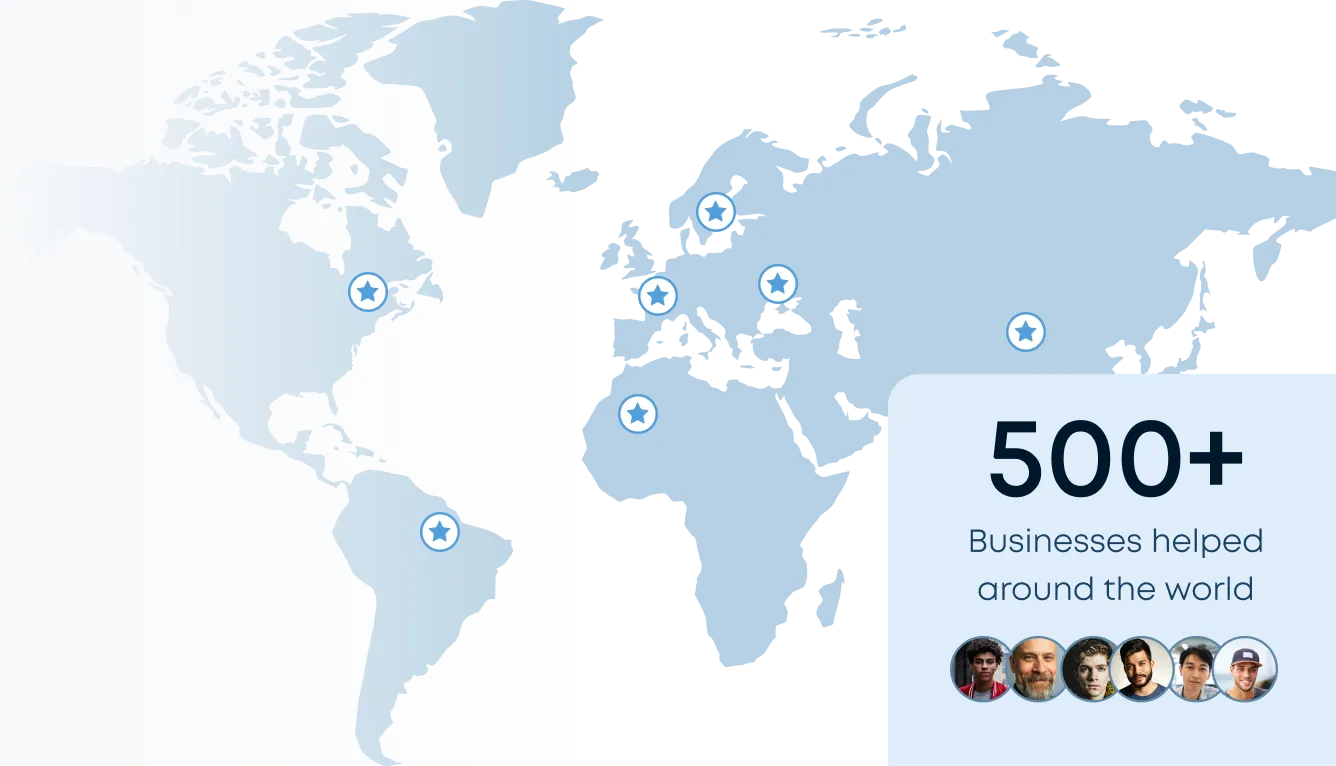
Join 500+ businesses that have expanded internationally through FirmEU. Our platform connects companies with banking and payment partners aligned with their operational and geographic requirements.

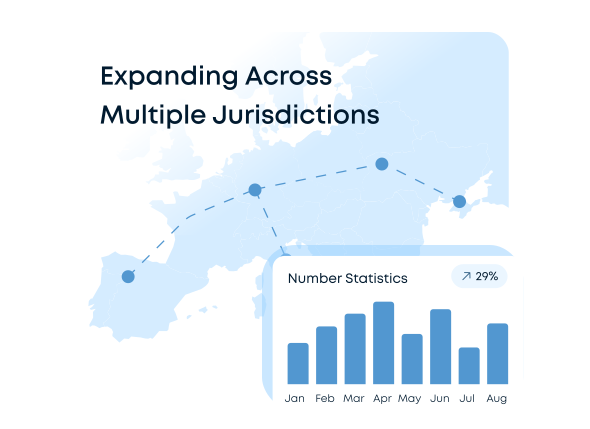
We connect financial institutions with banking and cross-border payment partners that understand complex operational and compliance needs.

FirmEU connects sports management firms, talent agencies, and event organizers with banking and payment partners that support international operations.
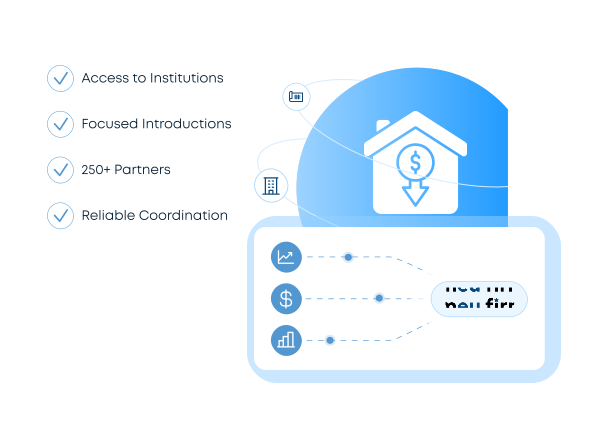
We connect construction and infrastructure firms with trusted banking and payment partners that support high-volume, cross-border operations.

FirmEU connects real estate investors, developers, and property management companies with trusted banking and payment partners that support cross-border operations.
FirmEU connects high-growth businesses with trusted banking and cross-border payment partners.


-min.webp)
We begin with a free consultation to understand your goals, challenges, and preferences.

You submit the documents, and we guide you through KYC, KYB, and compliance.

We ensure you launch fully compliant with the right structure, accounts, and tools

FirmEU exists to simplify how businesses access global banking and payment infrastructure. We connect companies with verified financial institutions that match their business model and region. By focusing on transparency and precision, FirmEU ensures every connection is based on compatibility, helping businesses operate confidently in a cross-border environment.
.webp)
Find the right banking partner for global business operations. Understand multi-currency accounts, foreign exchange pricing, payment networks, and risk management.
Setting up a merchant account is essential for online businesses that want to accept card payments securely and manage settlements efficiently.
Kratom sellers often face stricter payment rules than standard online stores. Processors may review product type, legal status, chargebacks, website claims, and transaction history before approval.
Banks often need accounts with one another to move money across countries and currencies. Nostro and Vostro are two terms used for that relationship, but the difference comes down to perspective.
Merchant of Record and Payment Facilitator models can both help businesses accept payments, but they do not take on the same role. The biggest difference is responsibility.
Global groups can create hundreds of internal payments between subsidiaries each month. Sending every invoice separately increases bank fees, FX activity, reconciliation work, and treasury effort. Multilateral netting combines those obligations before settlement, so each participating company usually makes or receives one net payment.
Payment terms tell a customer when an invoice must be paid and under what conditions. Clear terms help businesses plan cash flow, avoid confusion, and set fair expectations before money becomes due.
Banks make international currency conversion easy, but the final cost can be harder to see. Exchange-rate margins, transfer fees, and intermediary charges can all affect what a business actually receives.
Merchants often hear the term ISO when setting up card payments, merchant accounts, or payment processing. Yet the role can feel unclear because ISOs, processors, and merchant service providers often appear in the same payment chain.
Global e-commerce creates more payment pressure than local selling. Businesses must handle different currencies, payment methods, banks, settlement rules, and customer expectations at the same time. Strong payment infrastructure keeps these parts connected, reduces payment friction, and gives companies a more reliable base for international growth.
An overseas investment can rise in value and still deliver a weaker return after currency conversion. Exchange rates add another layer of risk to investments, international payments, foreign debt, and overseas revenue. This blog explains how hedging works, what it may cost, which methods companies can use, and how businesses can decide when protection makes financial sense.
Private keys sit at the center of digital asset ownership, which also makes them a serious security target. MPC custody changes how those keys are created, held, and used. This article explains how the technology works, where it fits within financial operations, and what institutions should consider before choosing an MPC custody setup.
A bank account for gambling business operations is harder to secure because banks treat gambling as high risk. This blog explains why casinos face account delays, stricter compliance checks, payment limits, and approval problems. It also shows how FirmEU helps gambling companies prepare stronger banking profiles and approach account setup with better structure.
Payment Authorization Rates decide how many customer payments get approved instead of declined. This blog explains why high-risk businesses face more payment failures, how merchants can improve approval performance, and how FirmEU helps businesses prepare stronger payment profiles, improve banking readiness, and connect with suitable high-risk payment partners.
Virtual IBAN accounts help businesses and fintechs receive payments through dedicated account details, while virtual collection accounts mainly help organize incoming funds by client, invoice, or market. This blog explains the difference, shows when each option works best, and covers how FirmEU accounting services help companies manage cleaner financial records.
Payment Reconciliation helps international businesses match payments, invoices, fees, and settlement records with better accuracy. This blog explains why reconciliation becomes harder across countries and currencies, how businesses can reduce manual finance errors, and how FirmEU account management services help companies organize payment flows, improve visibility, and manage international transactions with more control.
Virtual Accounts Global Payments assist businesses in managing international collections, currency flows, and payment tracking without opening separate bank accounts in every market. This blog explains how virtual accounts reduce payment friction, enhance reconciliation, and support faster financial control. It also shows how FirmEU account management services help companies organize global payment operations with better structure and visibility.
Choosing the correct merchant category code 7995, MCC 7801, or MCC 7802 directly impacts payment approvals, regulations, and processing stability for gambling businesses. This guide compares each classification, explains the right MCC code for casino operations, and shows how FirmEU helps gaming businesses secure compliant banking and payment solutions for sustainable growth.
Learn how merchant category code 5122 applies to pharmaceutical wholesalers, how MCC 5122 vs MCC 5912 differs, and why businesses should never misuse a cannabis MCC code. In the details below, you will get to know where hemp and CBD businesses fit, what risks merchants should avoid, and how FirmEU helps businesses secure compliant banking and payment processing solutions for regulated industries.
Learn how merchant category code 7273 works, why it is the standard MCC code for adult & dating, and how it affects payment processing, compliance, chargebacks, and merchant account stability. This blog also explains the challenges businesses operating under an adult industry MCC code face and how FirmEU helps connect merchants with reliable banking and payment partners that support high-risk industries.
MCC 6051 is the merchant category code used for quasi-cash transactions, cryptocurrency businesses, and non-financial institutions. Learn how it affects payment processing, interchange fees, compliance, authorization rates, and merchant account approvals.
Failed payments don't always mean a customer has insufficient funds. Many transactions fail because of temporary banking issues, processor downtime, or network interruptions that can often be resolved automatically. This guide explains how payment cascading works and what to consider when selecting a cascading payment processor for your business.
Finding a reliable payment processor remains one of the biggest challenges for cannabis businesses. Traditional payment providers often have strict policies that make payment acceptance more complicated for this industry. This guide highlights five trusted cannabis payment processing companies, explains what they offer, and shares practical tips for selecting the right provider for your business.
As more crypto businesses accept debit and credit card payments, payment security has become just as important as blockchain security. Handling cardholder data brings additional compliance responsibilities that many businesses overlook.
Selecting a crypto payment processor is about more than accepting digital currencies. The right provider should support your business model, security requirements, settlement preferences, and future growth plans.
Expanding into international markets is easier than ever, but managing payments across different regions remains a challenge. Different customer preferences, currencies, and payment methods can quickly create unnecessary operational complexity.
Declined crypto transactions are often caused by input errors, network delays, or system gaps. A structured payment setup helps businesses handle failures better and improve transaction success.
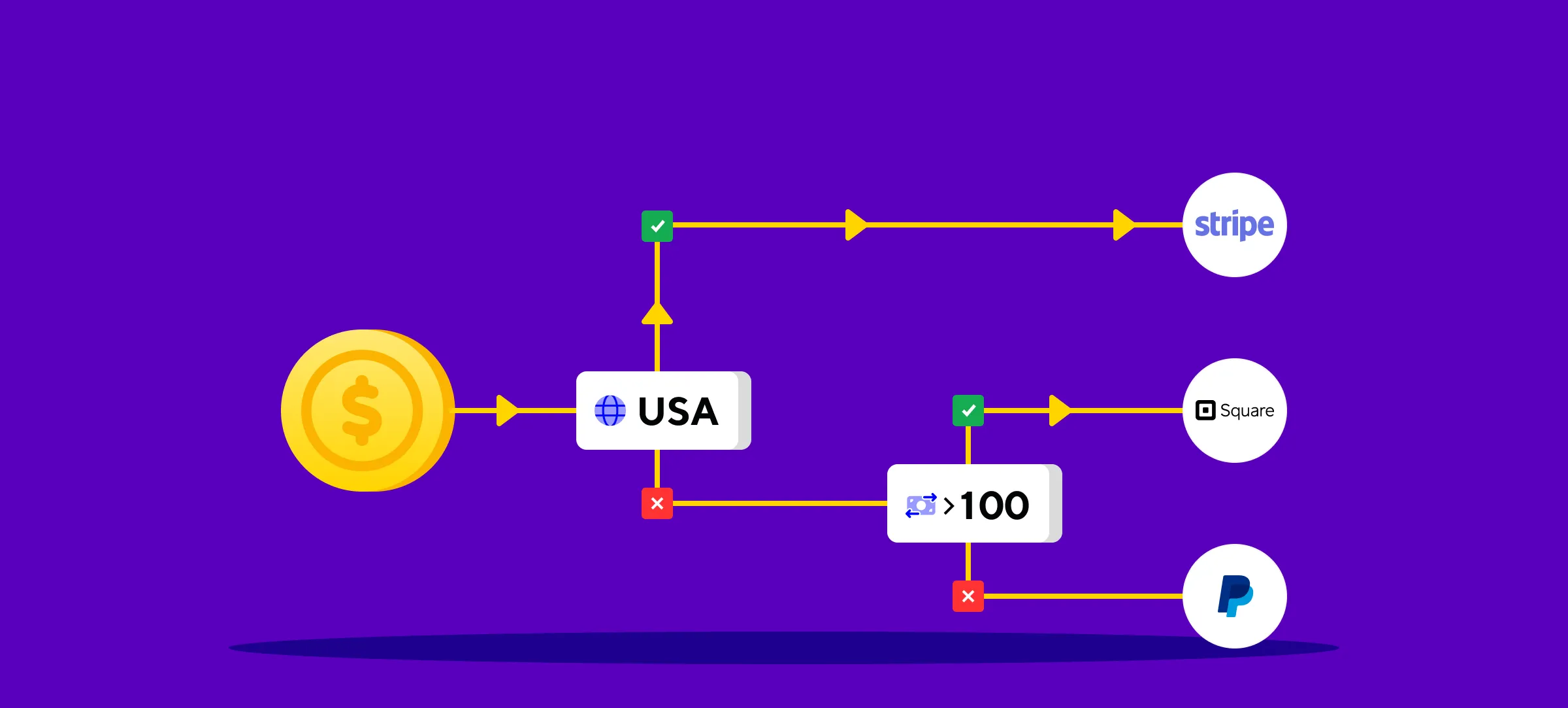
Choosing a payment system affects deposits, rental collections, invoices, and customer payment experience. Real estate agencies often need better transaction visibility, easier collections, and organized financial tracking. Stripe, PayPal, and Square support different payment needs based on business workflow and reporting requirements. In this blog, we compare all three platforms to help businesses choose the right fit.
Oil and gas operations depend on reliable collaboration across suppliers, logistics, payments, and international coordination. The wrong partnership can gradually create financial pressure and operational disruption. This blog explains how businesses identify the right partners and how the strong ones support long-term, operational stability.
Card payments are no longer limited to physical checkout counters or traditional POS machines. Businesses today use payment links, online checkouts, and mobile payment tools to manage transactions more flexibly. Understanding these options can help businesses choose payment methods that better support modern operations and customer expectations.
Many real estate businesses focus heavily on closing deals while overlooking how payments and commissions affect operations behind the scenes. As transactions become more layered and international, organized payout coordination and settlement visibility play a much bigger role in maintaining smoother business operations.
Many businesses choose a POS system based on convenience and only realize later that the setup no longer supports their operations properly. Small limitations in transaction handling, reporting, or flexibility can slowly affect daily performance. Understanding the real difference between offline and online POS systems can help businesses avoid operational friction before it becomes a larger problem.
This blog explains the challenges construction firms face when paying international contractors and why payment structure, compliance, and operational planning play a major role in global projects.
Banking and payment processing serve different roles, but both are essential for business operations. A clear and well-aligned setup helps reduce friction, improve efficiency, and support long-term growth.
Payment failures in cross-border transactions often come from small gaps in the system. A structured approach helps improve reliability, reduce disruptions, and support smoother international payments.
Multi-currency payments directly impact conversions, margins, and customer trust. Learn what actually works and how to optimize your e-commerce payment processing services for global growth.
High-risk businesses face strict payment challenges that can disrupt revenue and growth. This guide explains how to build a stable payment processing system. Learn strategies to reduce risk and scale globally.
Opening a business bank account internationally is more complex than it seems. This guide explains how cross-border banking solutions and digital banking for online businesses can simplify the process. Learn practical steps to avoid delays and improve approval chances.
Payment gateway, processor, and acquirer each play a different and crucial role in online transactions. Knowing how they work together helps ventures reduce payment failures, improve approval rates, and develop a trusted payment system. Solutions like FirmEU support seamless global payment processing and scalability.
The right payment methods can make or break the customer experience in global markets. Businesses need a balanced mix that matches how people prefer to pay in different regions. A clear and well-structured setup helps reduce friction, improve transactions, and support smooth international growth.
Global e-commerce growth comes with hidden payment challenges from currency conversion fees to failed transactions and compliance risks. This guide breaks down the key barriers and how to overcome them.
Cross-border payments often take longer than expected due to intermediary banks, compliance checks, currency conversion, and global banking differences. This guide breaks down what really causes delays and how businesses can reduce them.
Struggling to process payments for your betting platform? Explore high-risk-friendly payment solutions, reduce chargebacks, and scale globally with the right setup.
SEPA payments are simple—but not risk-free. Learn how to secure your SEPA setup, reduce reversals, and build a stable payment system for long-term growth.
Accepting payments for adult content can be challenging due to compliance and risk factors. This guide explains how to build a stable payment setup using the right processors and methods.
Relying on a single payment processor can quietly hurt your revenue. This guide explains how multiple payment gateways work, when you need them, and how to integrate them effectively. If you're scaling globally, this setup can make a real difference.
Cross border payments often fail due to routing, compliance, and infrastructure issues. Learn how to fix delays and improve global payment systems.
Multi-currency payment platforms help businesses accept international payments while simplifying currency conversion and financial management. This guide explains the essential features global businesses should consider.
Multi-currency payment processing helps businesses accept international payments in local currencies. It improves checkout experiences, reduces conversion costs, and supports global expansion.
Adult websites face challenges in high-risk payment processing. Learn the best payment gateways for adult sites to manage subscriptions, cross-border payments, and secure transactions.
Businesses operating internationally need reliable payment systems that support multiple currencies. This guide compares leading platforms and explains how to build a scalable global payment infrastructure
Cross-border payment gateways help businesses accept payments from customers across different countries, currencies, and banking systems.
This guide explains CBD payment processing compliance, key requirements, and how businesses can secure stable payment solutions.
Learn how payment localization helps global businesses support local payment methods, accept multiple currencies, reduce checkout friction, and improve international sales.
Many businesses enter Latin America expecting international card payments to be enough, only to discover that local payment behavior works very differently across the region. From PIX and Boleto in Brazil to OXXO and SPEI in Mexico, payment preferences in LatAm are highly localized. Understanding these methods can make a major difference in transaction performance and customer conversion.
Take a closer look at the 8 safest online payment methods and learn how to do secure payment online, quickly, and with greater protection against fraud, both online and offline.
How are consumers spending in 2026? Discover key trends in digital payments, inflation effects, and shifting priorities.
Stay compliant with the latest regulatory payments updates. Explore new regulations impacting fintechs, banks, and nonbank payment providers in 2027.
Discover how to set up a SEPA Direct Debit for your business. This in-depth guide covers every step, from mandates to compliance.
Learn how SEPA Europe works for EU and non-EU companies. Explore the SEPA zone list, euro payments, & setting up a European SEPA bank account.
Want to accept XRP? Learn how businesses can accept Ripple payments using an XRP payment gateway, manage XRP payment processing, and offer fast crypto payments.
Discover the top fraud prevention tools to protect your business from online scams and payment fraud.
Explore the 7 best crypto payment gateways in 2026. Compare features, fees and integrations to choose the best solution for your business.
The BNPL 2.0 revolution is here! See how Buy Now, Pay Later is transforming industries beyond retail, from travel to healthcare and beyond.
Uncover the key differences between a Payment Service Provider and a Payment Gateway. Learn how each works, and how to choose the best option for your business.
High-risk businesses face unique challenges. Learn what makes a business high-risk and strategies for success.
Meet PayFirmly, FirmEU's intelligent payment gateway with 500+ payment methods, fraud protection, and smart routing that increases approvals by 15%.
Compare risks, costs, and payment processing options to make informed decisions.
Find the perfect high-risk payment solution in 2025. Compare the top 5 solutions offering advanced security and seamless payment processing.
Searching for affordable foreign exchange providers? See why FirmEU stands at the top in this category in 2025.
Learn about the top options, their features, and how to select the right one to optimize your online transactions with FirmEU's expert recommendations.
Explore how a Fiat to Crypto Payment Gateway works and the benefits it offers.
Discover 'What is a High Risk Payment Gateway' and learn how it helps businesses handle transactions securely, even in high-risk industries.
Find out how to start an adult content business or online adult store. Explore business models, payment processing, legal requirements, privacy policies, age verification, and risk management.
Understand GDPR compliance in payments. Learn how businesses can protect customer data across online payments, credit card transactions, and financial services.
Explore chargeback prevention tips to protect high-risk businesses. Learn effective strategies to minimize chargebacks and safeguard your operations.
Explore the SEPA Zone with key information on participating countries, benefits, and how it simplifies cross-border payments in Europe
Discover what a high-risk merchant account is, along with key details and tips for effective management.
Ever wondered what an EMI (Electronic Money Institution) is and how it's different from a traditional bank account?
At FirmEU, our mission is to help crypto businesses harness the full potential of open banking by providing them with cutting-edge solutions.
Choosing the right Point of Sale (POS) system is crucial for high-risk businesses.
Artificial intelligence (AI) has come a long way, and it’s making a huge splash in the world of finance and banking.
In this blog post we delved into the basic guide for setting up payment processing for your dropshipping business.
We'll briefly explore what payment processing is for adult business owners and how to access these services against all odds
This blog post aims to provide a comprehensive outline of the process of opening bank account for CFD trading specifically.
In recent years, forex trading, also known as foreign exchange trading, has grown in popularity.
This blog post explores the importance of Forex business banking for both licensed and unlicensed companies or individuals.
Navigate adult business account complexities with our expert insights. Overcome high-risk challenges seamlessly for a secure financial foundation.
FirmEU specializes in opening bank accounts for any industry, just like for import/export businesses.
Crypto businesses face many challenges when trying to open bank accounts. FirmEU specializes in crypto bank account openings.
FirmEU is an independent matchmaking platform that connects businesses with verified global banking and payment partners based on their profile, industry, and region
After completing the FirmEU checklist, our team, supported by AI-driven technology, reviews your details and identifies suitable banks or processors from our network of over 250 verified institutions. You’re then introduced directly to your best-fit partner.
FirmEU supports international businesses across various industries, including e-commerce, travel, cryptocurrency, financial institutions, and more.
No. FirmEU is not a bank or financial institution. We operate as an independent matchmaking platform, connecting businesses with verified financial partners. All onboarding, KYC, and approval decisions are handled directly by the financial institution.




Tell us about your company, and we’ll match you with the most suitable global banking or payment providers from our verified network.